Last updated: July 2026
Editor’s note: This article has been contributed by Matthew Villa, MGID’s Head of Sales, US, who has seen firsthand that in affiliate marketing, buying traffic is the easy part — knowing what to test, what to cut and when to scale is where the real work begins.
The affiliate marketing industry has matured. We are past the era of cheap, easy clicks and basic tracking pixels. Relying solely on volatile social media ad accounts or waiting months for SEO traction can make it harder to scale acquisition efficiently. If you want to diversify your traffic sources and build campaigns that can scale, affiliate marketing native advertising deserves a place in your strategy.
This is not about placing a random banner at the bottom of a blog post. It is about using advanced contextual targeting and AI-driven optimization to reach relevant audiences across the open web while reducing reliance on third-party cookies.
In this guide, we cut through the noise. We break down how media buyers launch and optimize native ad affiliate campaigns, compare native traffic with social and search, and explore creative approaches across key affiliate verticals.
Affiliate Marketing Native Advertising vs. Social & Search
Before you allocate your testing budget, you need to understand exactly where affiliate offer native traffic fits into your broader media mix. Social media offers powerful behavioral and audience targeting, but campaigns can be vulnerable to creative fatigue and platform restrictions. Search traffic captures strong existing intent, but CPCs can climb quickly in competitive verticals.
Native advertising sits somewhere in between. It gives affiliate marketers access to audiences across the open web, combines contextual targeting with broad reach and can offer more room to test performance-driven offers.
The differences go beyond CPC. Here’s how native, social and search compare across the factors that matter most when planning an affiliate campaign:
| Feature | Native affiliate traffic | Social traffic (Meta/TikTok) | Search traffic (Google Ads) |
|---|---|---|---|
| Cost | Varies significantly by GEO, vertical, competition and placement | Varies by audience, objective, placement and competition | Can be high in competitive commercial-intent categories |
| Targeting Core | Contextual, semantic and campaign-performance signals | Behavioral, interest-based and lookalike audiences | Keyword and search intent |
| Approval & Compliance | Suitable for many affiliate verticals, subject to platform and publisher policies | Platform policies can be restrictive for some affiliate offers | Strict advertising and landing-page requirements |
| Best Suited For | Discovery-driven offers, content-led funnels and broad-reach campaigns | Audience-led campaigns, visual products and remarketing | Offers with clear existing search demand |
| Scalability | Broad reach across the open web | Large audiences within platform ecosystems | Scale depends partly on available search demand |
For some cost context, current industry benchmarks put native advertising at around $0.20–$0.50 per click, while WordStream’s 2026 benchmarks place Google Search Ads at around $5.42 per click and Meta Ads at around $0.78.
Don't read that as “native is automatically cheaper and better,” though. Search captures active intent, while native typically reaches people earlier in the journey — so what happens after the click matters more than CPC alone.
The 6 Biggest Mistakes Killing Your ROI
Working with media buyers, we see similar patterns separating campaigns that scale from those that burn through their testing budgets. Many beginners struggle with native advertising because they approach it the same way they would social or search.
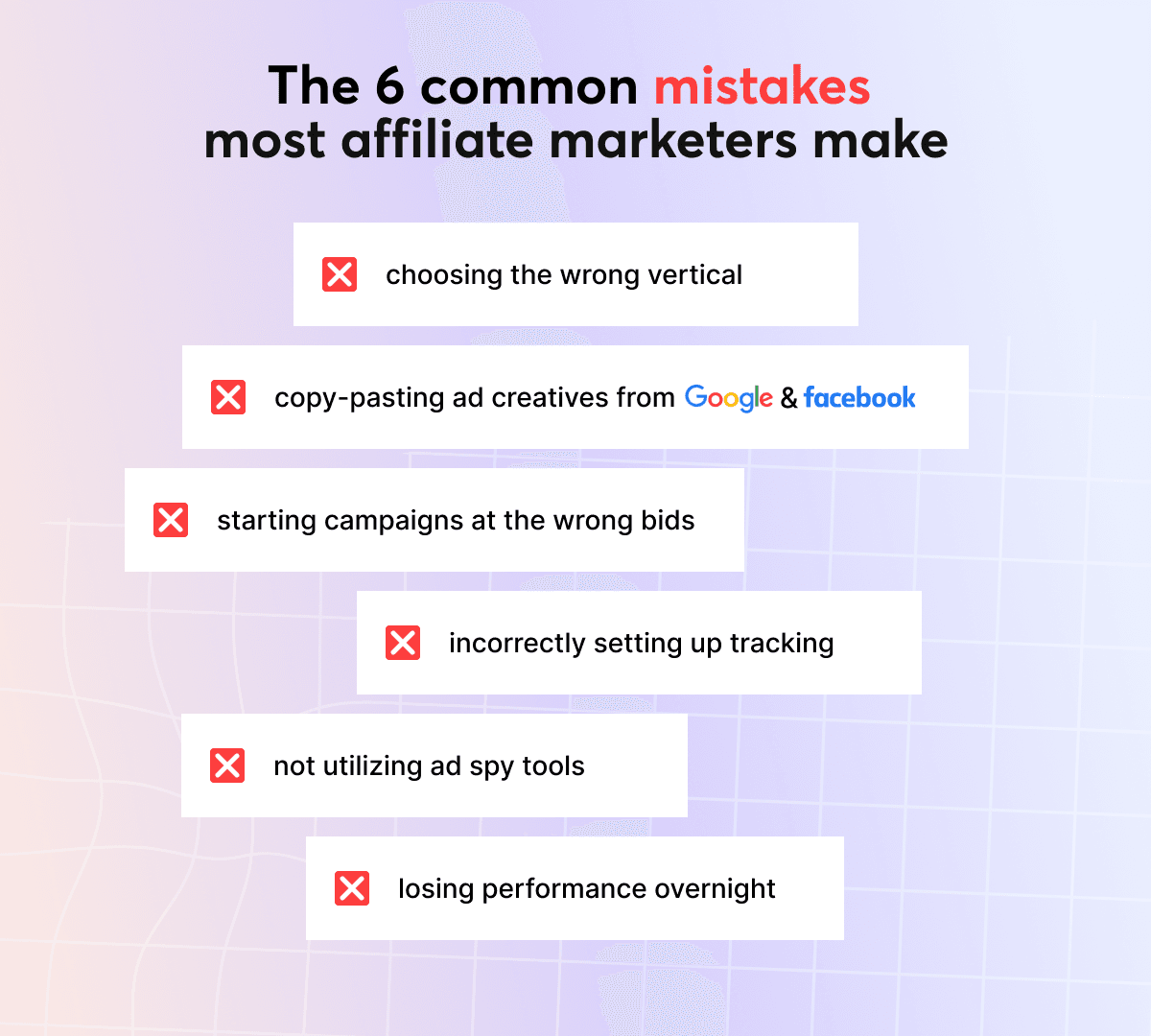
If your campaigns are underperforming, it often comes down to these six mistakes:
- Copy-pasting ad creatives from Facebook & Google: Native ads appear alongside editorial content, so creatives designed for a social feed or search campaign may feel out of place. Build native-first creatives that fit the surrounding environment while still giving users a reason to stop and click.
- Choosing the wrong vertical: Not every offer is equally suited to native traffic. Native is commonly used for performance-driven verticals such as Nutra, Finance, dating and eCommerce, where discovery and content-led funnels can play an important role. Before committing your budget, check the potential of the offer, GEO and traffic source together.
- Setting up tracking incorrectly: Reliable conversion data is essential for optimization. Client-side pixels remain a valid tracking option, but server-to-server (S2S) postbacks can provide more resilient conversion tracking because they are less affected by browser restrictions, ad blockers and cookie limitations. Whichever setup you choose, make sure conversions are passed back accurately before you start scaling.
- Starting campaigns at the wrong bids: Bid too aggressively and you can burn through your testing budget before you have enough data to learn from. Bid too conservatively and you may struggle to generate enough traffic for a meaningful test. Start around the recommended range for your market and adjust as performance data comes in.
- Using ad spy tools as a copy machine: Spy tools can help you understand which offers, angles, headlines and pre-landers are already active in your target GEO. Use them for research and inspiration, not as a substitute for testing your own angle. What works for another advertiser will not automatically work for your audience, offer or funnel.
- Ignoring ad fatigue: Even strong creatives lose momentum. Monitor CTR and conversion performance, keep testing new variations and refresh ads when engagement begins to decline. MGID’s CTR Guard, for example, can detect creative burnout from campaign performance signals and generate fresh variations automatically.
The biggest overarching problem? Impatience. Native advertising is a data-buying game. Give your campaigns enough budget and time to collect meaningful performance data before making major optimization decisions. Then use that data to cut weak placements, strengthen your winners and keep testing.
How AI Tools Changed Affiliate Marketing Native Advertising
Building every headline and creative variation by hand is a good way to fall behind. The market moves too fast. Over the last few years, artificial intelligence has taken over much of the grunt work involved in launching and scaling campaigns. Speed matters more than ever.
Creative production is totally different today. You don't always have to wait on design teams. Generative tools let a single media buyer produce dozens of image variations and localize copy across multiple GEOs much faster. You build massive asset batches, test them against each other and let the data pick the winner.
Then look at the bidding side. Trying to manually adjust your CPC across thousands of separate publisher widgets quickly becomes impractical. Smart platforms like MGID address this with predictive optimization. CPA Tune, for example, uses machine learning to adjust CPC bids based on conversion data in real time. Early adopters saw a 155% higher average conversion rate, with increases of up to 300% in some verticals and markets.
Targeting also shifted. The move away from third-party cookies pushed contextual technology forward. Modern contextual engines don't just match basic keywords anymore. They can analyze the meaning and sentiment of a page to determine where an ad fits. That gives advertisers another way to place native ads for CPA offers in relevant environments without relying on third-party cookies.
Creative Angles Worth Testing
Let’s talk about visual angles. What worked a few years ago can feel painfully dated today. Run another polished stock photo of a happy person pointing at your product, and there is a good chance users will recognize the ad before they even process the message. Native creatives need to earn the click, and that often means testing visuals that feel more natural, unexpected or curiosity-driven.
Here are three angles worth testing across major affiliate verticals.
1. Nutra: The "UGC Macro" Angle
Stop using fake doctors or models holding pill bottles. The market has seen plenty of them. Instead, test creatives that feel less staged and more like something a user might actually photograph or share. Think of a tight, slightly out-of-focus macro shot of an unusual ingredient, or a simple glass of water with a colored powder. It doesn't immediately look like a traditional ad. It creates curiosity.

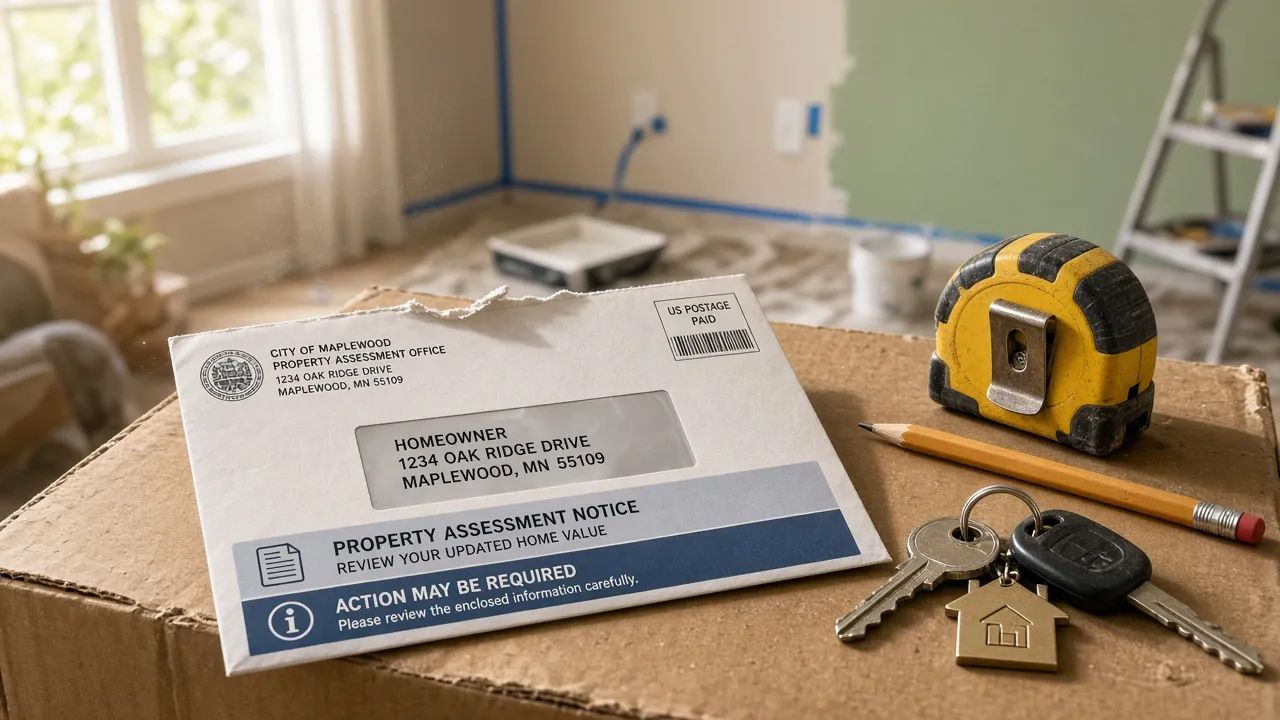
2. Finance: The "Kitchen Table" Notice
Nobody needs another guy in a tailored suit pointing at a rising stock chart. If you are running lead gen for insurance, debt relief or mortgages, test urgency and realism instead. Use a picture of an opened, generic-looking envelope sitting on a messy kitchen table next to a set of keys. It feels familiar and creates an immediate need to know what the message is about.
3. eCommerce: The "POV" Format
Kill the studio lighting. If you are selling a flashlight, a drone or a car gadget, don't automatically put it in a white lightbox. Test a grainy, low-lit photo of the flashlight cutting through darkness in a backyard, or show the product being used from the buyer's point of view. Think raw customer-review energy rather than a polished product shoot.

How to Find Winning Offers and Launch Your Campaign
Picking a random product from a network and hoping for the best is a rookie mistake. If you want to succeed in affiliate marketing native advertising, the offer selection phase requires actual strategy. You need a product that fits the open web.
Here is how experienced buyers source their deals and push them live:
1. The "Intersection" Method
Do not guess what works. Talk to your affiliate network manager and ask for their top three performing offers. Then, talk to your MGID account manager and ask what is converting right now on the traffic side. Usually, their answers will be completely different. But when you find an intersection — a specific product or GEO that both managers recommend — that's your green light to test. Start there.
2. Balance Payout vs. CPC
Do not blindly chase the highest payout. A massive commission means very little if it costs too much to generate a conversion. Look at the economics of the whole funnel: payout, CPC, conversion rate and the amount of testing required to find profitable placements. A lower-payout offer with cheaper traffic and a stronger conversion rate can leave you with a much healthier margin.
3. Spy, Adapt and Localize
You do not need to invent a new angle from scratch. Use an ad spy tool to see what bridge pages, headlines and offers are already running in your target market. Find an angle that keeps appearing, then adapt it for your offer, audience and GEO. If you take an approach from the US to Brazil or Tier 2 Europe, don't just translate the copy — adjust the cultural references, imagery and message as well.
4. Lock Down Your Tracking First
Do not touch the launch button until your tracking is bulletproof. For affiliate campaigns, S2S postbacks are often a strong option because conversion data is passed server to server rather than relying entirely on the user's browser. If you use a dedicated tracker such as Voluum, make sure conversions are passed accurately from the affiliate network through the tracker and back to your traffic source. Whatever tracking method you choose, test it before launch. If the optimization algorithm cannot see your conversions, it cannot learn from them.
5. Launch Broad, Then Cut
When you go live, start with a moderate bid. Your goal right now is buying data, not instant profit. Give the campaign enough time and traffic to collect meaningful data before you start making aggressive cuts. Once you have enough data, open your dashboard and look at publisher placements. Ruthlessly blacklist widgets that have consumed enough budget without producing results. Keep the winners running and let automated bidding help scale the volume.
FAQ on Native Affiliate Marketing
What is native affiliate marketing?
Native affiliate marketing means promoting affiliate offers through ads that blend naturally into the content people are already consuming. Instead of waiting for someone to search for your product, you meet them across the open web and give them a reason to click.
Are native ads good for affiliate marketing?
They can be a strong fit, especially for offers that need a little discovery before the conversion. The catch? The offer, creative, GEO and funnel still have to work together — cheap traffic won't save a bad setup.
How do you start with native ads for affiliate offers?
Pick an offer that fits native traffic, lock down your tracking and prepare several native-first creatives before launch. Start testing, collect enough data and resist the urge to optimize everything after day one. Then cut what isn't working and scale what is.
How much traffic should you test before optimizing a native affiliate campaign?
Don't count days — count data. MGID recommends an initial test volume of around 5,000–10,000 clicks to get a clearer picture of how your funnel, creatives and placements are actually performing.
Conclusion: Stop Guessing, Start Scaling
The affiliate landscape is unforgiving for those who rely on outdated tactics. If your acquisition strategy still depends too heavily on a single social platform or SEO alone, you're leaving yourself with fewer ways to test, diversify and scale.
Native advertising is more than just an alternative traffic source; it can be a powerful part of a scalable performance marketing mix. With AI-driven bidding, contextual targeting and native-first creatives, you have more tools to find the right audience, learn from campaign data and scale what works.
Stop treating your media buying like a lottery. Lock down your conversion tracking, test your bridge pages and trust the data phase. At MGID, our ethos has always been simple: you sell the product, and we will sell the click.
Ready to dive deeper? Check out our other resources:
- Want to go back to the basics? Read our guide on How to Start Affiliate Marketing.
- No landing page? Learn about Affiliate Marketing Without a Website.
- Looking for new angles? Explore the Main Verticals in Affiliate Marketing.