Gaming has become one of the internet's biggest attention magnets, making it impossible for performance marketers to ignore any longer.
You don't have to own a gaming console to know what GTA 6 is. Rockstar's second trailer racked up more than 475 million views across platforms within its first 24 hours, making it one of the biggest entertainment launches ever. For days, GTA 6 was simply everywhere, even people who'd never played a Rockstar game knew about its upcoming release. That's not the kind of reach you get to ignore.
What we can learn from Rockstar’s release is that gaming outgrew its "niche" label a while ago. It's where hundreds of millions of people discover content, interact with brands and build communities. As competition for attention keeps tightening across the usual digital channels, gaming has quietly earned a permanent line item on the media plan.
The Biggest Gaming Platform Fits in Your Pocket
Ask someone to name the world's biggest gaming platform. Most people will guess PlayStation, maybe Xbox. Someone will bring up Steam. Almost nobody gets it right.
It's a smartphone.
Mobile games are expected to generate around $121.1 billion in 2026, accounting for roughly 52% of all gaming revenue, while PC and console together make up the rest. Games like Candy Crush, Monopoly GO!, Clash Royale and Royal Match draw audiences plenty of TV networks would envy.
Gaming is hard to define because its users don’t look like any one audience. Today's players vary from someone grinding a boss fight in Elden Ring to someone clearing three levels of Candy Crush on the train home. While one owns a mechanical keyboard, the other has never once thought of themselves as "a gamer."
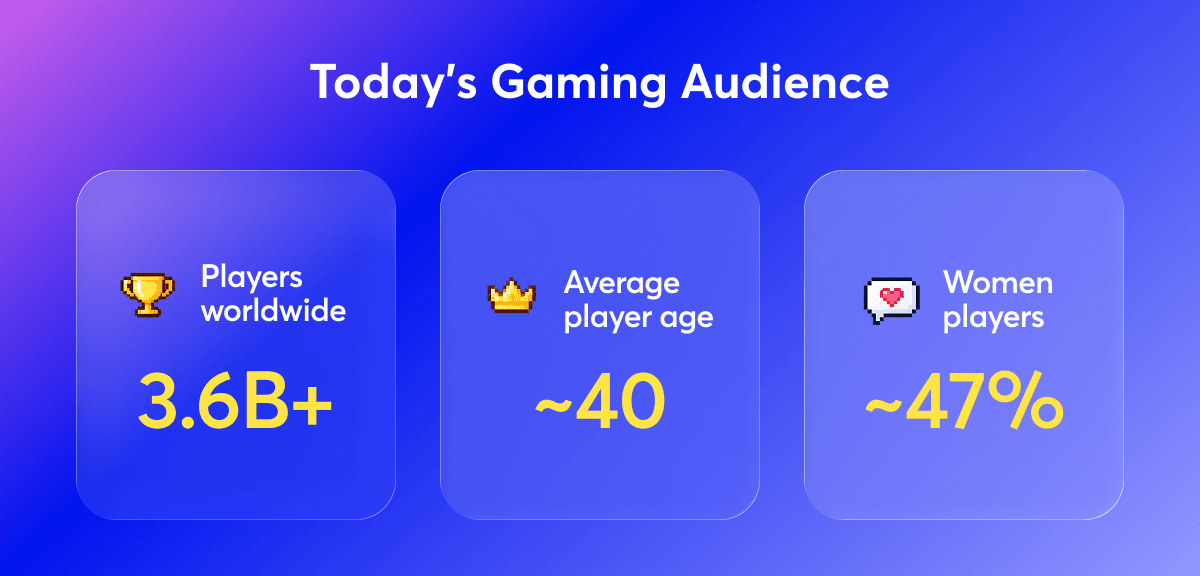
Marketing loves neat audience segments, and gaming politely ignores them. More than 3.7 billion people are expected to play games globally this year. At that scale, "gamers" aren’t a demographic. They are just people, with different habits, devices and reasons for tapping the screen.
People Actually Choose to Watch Ads
Every marketer dreams of an ad nobody skips. Gaming already built one.
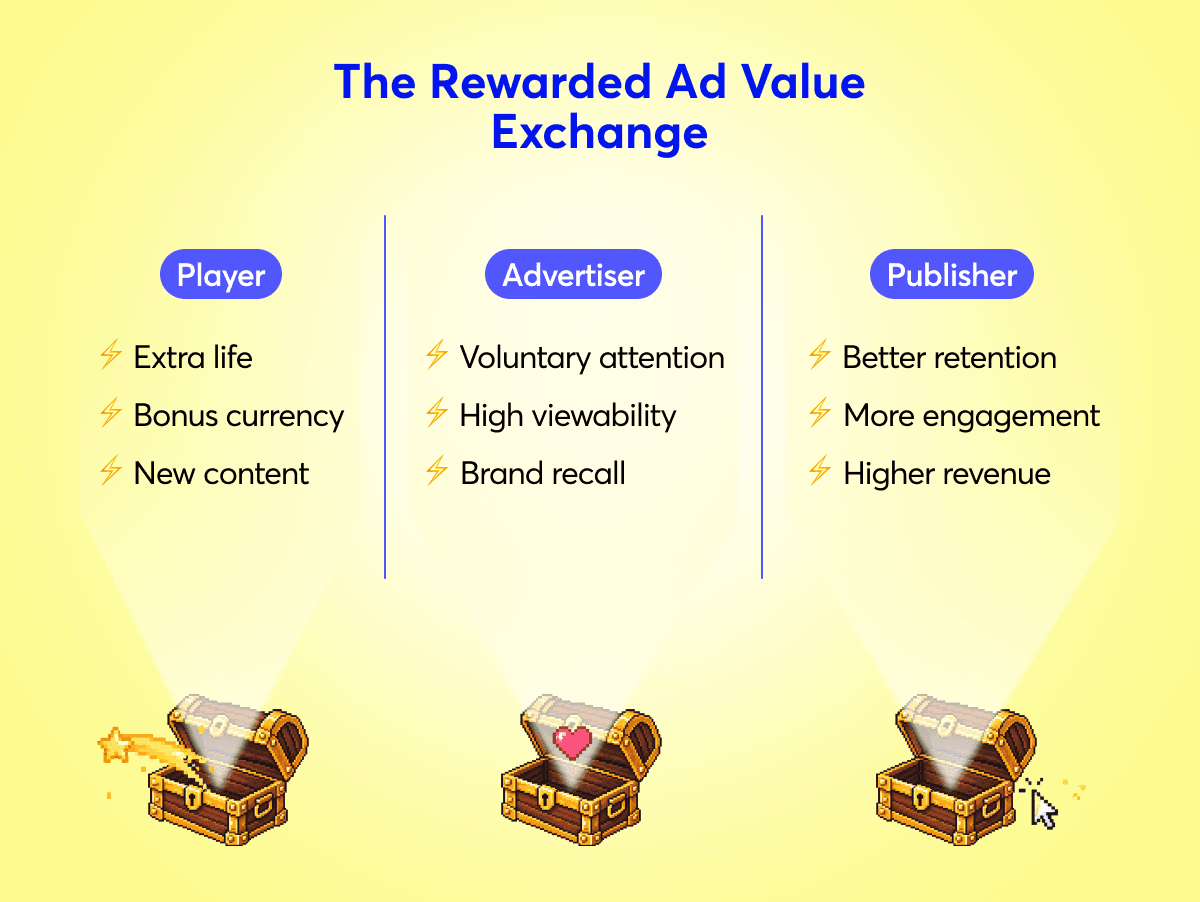
In plenty of games, thirty seconds of video buys you an extra life, bonus currency, a new item or another shot after a fail. Millions of players make that trade every single day, on purpose.
This simple exchange powers one of gaming's most effective ad formats: rewarded advertising. Instead of interrupting the experience, the ad becomes part of it. Players decide whether another life is worth thirty seconds of their attention. When they hit play, everybody walks away with something.
The benefits go beyond user experience. Rewarded ads are also associated with stronger business outcomes. Players who watched a rewarded full-screen ad during their first week showed 53% retention, while rewarded-ad users were reported to be four times more likely to make an in-app purchase than non-engaged users.
The difference between traditional digital ads and rewards ads is clear:
| Traditional digital ads | Rewarded ads |
|---|---|
| Interrupt the experience | Extend the experience |
| Skipped on reflex | Watched by choice |
| Compete for attention | Trade value for attention |
That value exchange rewires how the ad is perceived. Research from Dentsu and Lumen found that rewarded video consistently delivers some of the highest attention levels across digital formats, with near-perfect viewability, simply because people are choosing to be there.
Candy Crush Is Selling More Than Candy
Few people think of Candy Crush Saga as an advertising platform, but Microsoft certainly does. Every day, millions of players voluntarily sit through rewarded ads to earn another life, protect a streak or unlock a reward. For advertisers, those moments have quietly become some of the most valuable inventory in mobile gaming.
- Maybelline ran rewarded ads in Candy Crush and saw website traffic jump more than 552%.
- Prada promoted its Paradoxe fragrance through rewarded video, pulling in over 40,000 sample requests in the first 24 hours and lifting website traffic by over 1,813%.
- KitKat partnered with Candy Crush Saga on a global rewarded-video and interactive campaign, landing a 29-point lift in ad recall and video completion rates above 97%.
Thirty seconds, freely given, turns into the thing every advertiser is chasing: engagement nobody had to force.
Gaming Has More Than One Way to Sell
Rewarded ads are just one entry in a much bigger toolkit, and gaming's version of that toolkit looks nothing like the rest of digital marketing.
- Rewarded ads trade something valuable for a player's time.
- Playable ads let people try a game before downloading it, turning the ad itself into a mini demo
- In-game placements weave brands straight into the world, from virtual billboards in racing games to courtside signage in sports titles.
- Creator partnerships bring brands into Twitch streams, YouTube videos and esports broadcasts where communities already spend hours every week.
Each format solves a different marketing problem. Some drive user acquisition, others build awareness or deepen the pull of a creator's community. Stack them together and gaming turns into one of the most versatile media environments a marketer can tap into.
Why Is Gaming Still Underrated?
Most media strategies were built long before gaming reached today's scale. TV, search and social became the default performance channels, while gaming was often treated as a specialist or experimental media buy. That perception has been slower to change than the market itself.
Today, gaming combines massive reach with measurable, performance-oriented ad formats, making it a natural fit for modern media plans.
Where Gaming Fits Next
Performance marketing follows behavior, and right now behavior is playing out inside games. Billions of hours go into playing, watching streams, joining communities and sharing gaming content every single week. The formats are already sitting there — rewarded ads, playable demos, creators, esports, in-game placements — waiting to be used.
The real challenge is figuring out how big a slice of the media mix gaming deserves and where it can create the most value.