AI helps brands scale native advertising campaigns with smarter targeting, automated bidding, creative optimization and better traffic quality, improving ROAS, lowering CPA and increasing conversions.
Native advertising has one simple rule: show the right ad to the right person at the right moment. Miss any of those, and your campaign bleeds money. That's always been true. However, what's changed is how fast you can get there.
A few years ago, figuring out which creative works, which audience converts or which placement is worth the money took weeks of manual testing. Now that cycle runs in the background, continuously, without anyone touching a spreadsheet.
The five campaigns below are here to show what actually happened when brands used AI well. We’ll explore what the problem was, what they did and what changed in the numbers.
Why AI Performs So Well in Native Advertising
Relevance drives native advertising performance. The stronger the match between an ad and its surrounding content, audience and timing, the better the results. Achieving that match consistently, across multiple campaigns and placements, is where AI delivers its biggest advantage.
Targeting, bidding, creative rotation and traffic analysis can now run continuously without manual intervention. What used to take days of testing happens in real time, with optimization signals feeding back into the campaign automatically.
Here's what that looks like across the main areas of native campaign management.
| AI capability | Impact on campaigns |
|---|---|
| Predictive targeting | Finds high-intent audiences faster |
| Creative optimization | Improves CTR and reduces creative fatigue |
| Automated bidding | Helps maintain target CPA and ROAS |
| Traffic quality analysis | Filters low-quality or invalid traffic |
| Contextual matching | Places ads in more relevant environments |
Predictive Targeting Improves Traffic Quality
AI processes engagement patterns, browsing behavior, device signals and contextual data to surface audiences with higher conversion potential faster and more accurately than manual segmentation allows. The result? Better traffic quality from the start, before a single bid is placed.
AI Speeds Up Creative Testing
Native campaigns lose momentum quickly when creatives go stale. AI tools continuously test headline, image and CTA combinations, automatically shifting spend toward top-performing variations, compressing what used to be weeks of manual A/B testing into an ever-constant background process.
Automated Bidding Supports Better ROAS
AI-powered bidding adjusts CPCs and CPA targets in real time based on conversion probability, placement quality and traffic behavior. In competitive verticals where margins are tight, that level of responsiveness makes a measurable difference in overall campaign profitability.
Contextual AI Improves Relevance
Contextual AI evaluates page content, keywords and structure to match ads with genuinely relevant environments. For native advertising specifically, that alignment tends to produce stronger engagement and reduce post-click drop-off: two metrics that directly affect campaign efficiency.
Case Study #1: Heinz Let AI Prove Its Own Brand Recognition
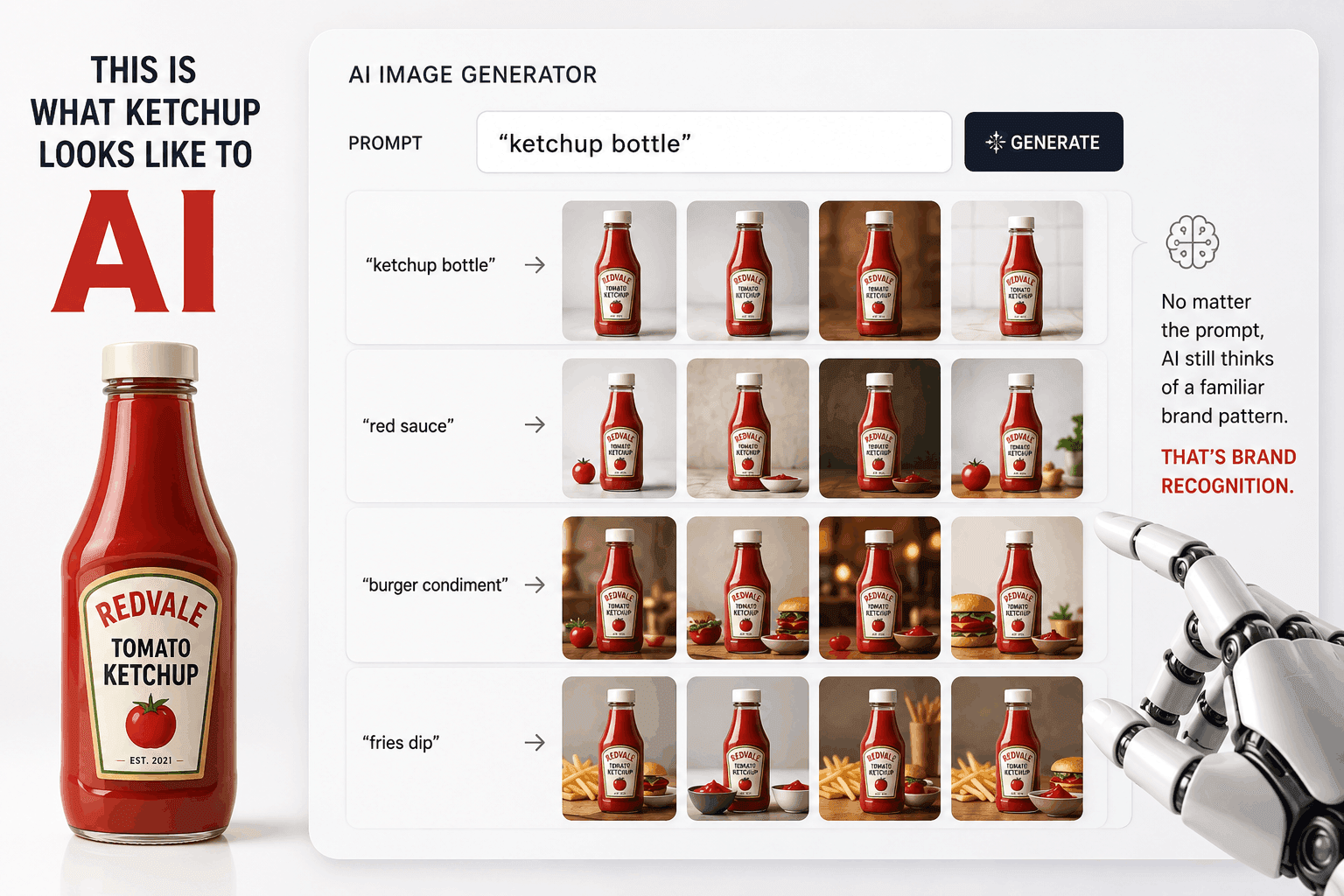
Some of the most successful AI advertising examples work because the idea feels simple and instantly recognizable. Heinz achieved exactly that with its famous AI ketchup campaign.
The Challenge
Heinz needed to strengthen brand recognition in a saturated consumer market and do it in a way that would generate genuine audience engagement rather than passive impressions.
The AI Strategy
Heinz used generative AI tools, including DALL·E, to produce ketchup visuals from simple text prompts. The conceit that drove the campaign was straightforward. Regardless of how the prompt was phrased, AI-generated ketchup images consistently looked like a Heinz ketchup bottle. The brand turned that observation into its central message "This is what ketchup looks like to AI" and invited users to run their own prompts and share the results, effectively making the audience part of the creative process.
Results
The campaign generated massive online engagement, widespread media coverage and strong social sharing momentum. It also became one of the most recognizable generative AI advertising examples in recent years.
Key Takeaway
Heinz didn't use AI to reinvent its brand identity, rather it used AI to prove how recognizable its brand already was. The campaign worked because the core insight was strong enough to stand on its own, and the technology gave audiences a direct way to experience it.
Case Study #2: Bedrop Reduced CPA by Up to 76% with MGID’s AI-Powered Optimization

Performance-focused native advertising campaigns often struggle with scaling spend while not losing profitability. Bedrop, a wellness brand specializing in beehive-based products, faced exactly that challenge in the competitive German health market. This became one of the stronger native advertising case studies that illustrated how AI-driven optimization can improve both efficiency and scale simultaneously.
The Challenge
Bedrop needed to grow purchase volume and add-to-cart conversions without sacrificing their margin in Germany's competitive health and wellness market. The core complication was attribution. MGID optimized toward last-click data, while Bedrop measured performance through Tracify's first-click model, creating a gap between what the platform reported and what the business actually saw.
The AI Strategy
MGID structured the optimization around four priorities: creative freshness, bidding efficiency, traffic quality and attribution alignment.
Campaigns moved from CPC bidding to CPA Tune, MGID's AI-powered bidding model, which adjusted toward conversion goals in real time. Creative performance was monitored through CTR Guard insights, with regular refreshes to prevent fatigue. Underperforming publishers were excluded on an ongoing basis, with budget reallocated toward stronger placements. Weekly comparisons between MGID and Tracify attribution data kept both sides aligned on what was actually driving results.
Results
By the end of week four, Bedrop achieved significant performance improvements across campaigns:
- CPA reduction of up to 76.54%;
- ROAS increase of up to 297%.
The campaign also maintained stronger alignment between platform optimization and the advertiser’s internal attribution data, allowing the brand to scale budgets with more confidence.
Key Takeaway
By combining automated bidding with real-time optimization, consistent creative updates and honest attribution tracking, MGID made scaling possible without losing profitability. In competitive markets, that operational discipline matters as much as the technology itself.
Case Study #3: Nike Used Two Decades of Match Data to Tell One Story
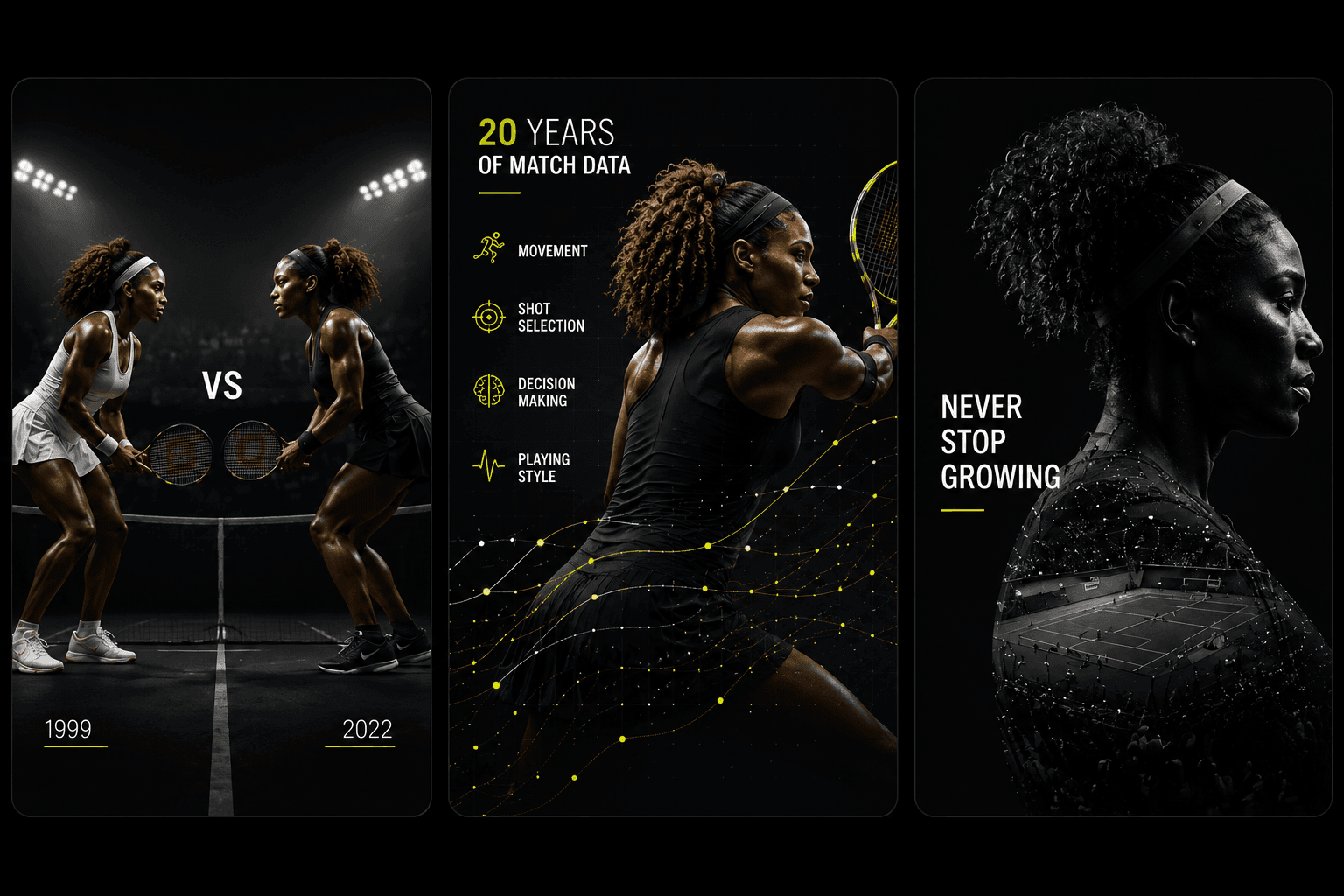
Some AI campaign examples focus on automation and performance metrics. Others show how AI can strengthen storytelling and audience engagement at scale. Nike’s “Never Done Evolving” campaign became one of the most recognizable examples of AI in advertising by combining sports data, machine learning and emotional storytelling.
The Challenge
Nike wanted to mark its 50th anniversary with something more substantial than a retrospective. The goal was to celebrate Serena Williams' career in a way that felt genuinely innovative, emotionally resonant and consistent with the brand's performance-driven identity, while also cutting through an extremely crowded media environment.
The AI Strategy
Nike used machine learning to analyze nearly two decades of Serena Williams' match data (movement, shot selection, decision-making patterns, playing style across different career stages) and used that analysis to simulate a virtual match between her younger and older self. The technology reconstructed how she played at each point in her career with enough fidelity to make the comparison feel real rather than illustrative. AI was never positioned as the centerpiece of the campaign; rather, AI was the mechanism that made the storytelling credible.
Results
The campaign generated massive online engagement and widespread media attention while reinforcing Nike’s positioning around innovation and elite athletic performance. It also became one of the strongest examples of AI in advertising campaigns where machine learning supported emotional storytelling instead of replacing it.
Key Takeaway
The campaign succeeded because the story came first. Two decades of match data would mean little without a narrative worth telling: AI gave Nike the means to tell it with precision and scale, but the creative direction was what made it land.
Case Study #4: How Nutella Made 7 Million Jars Feel Personal
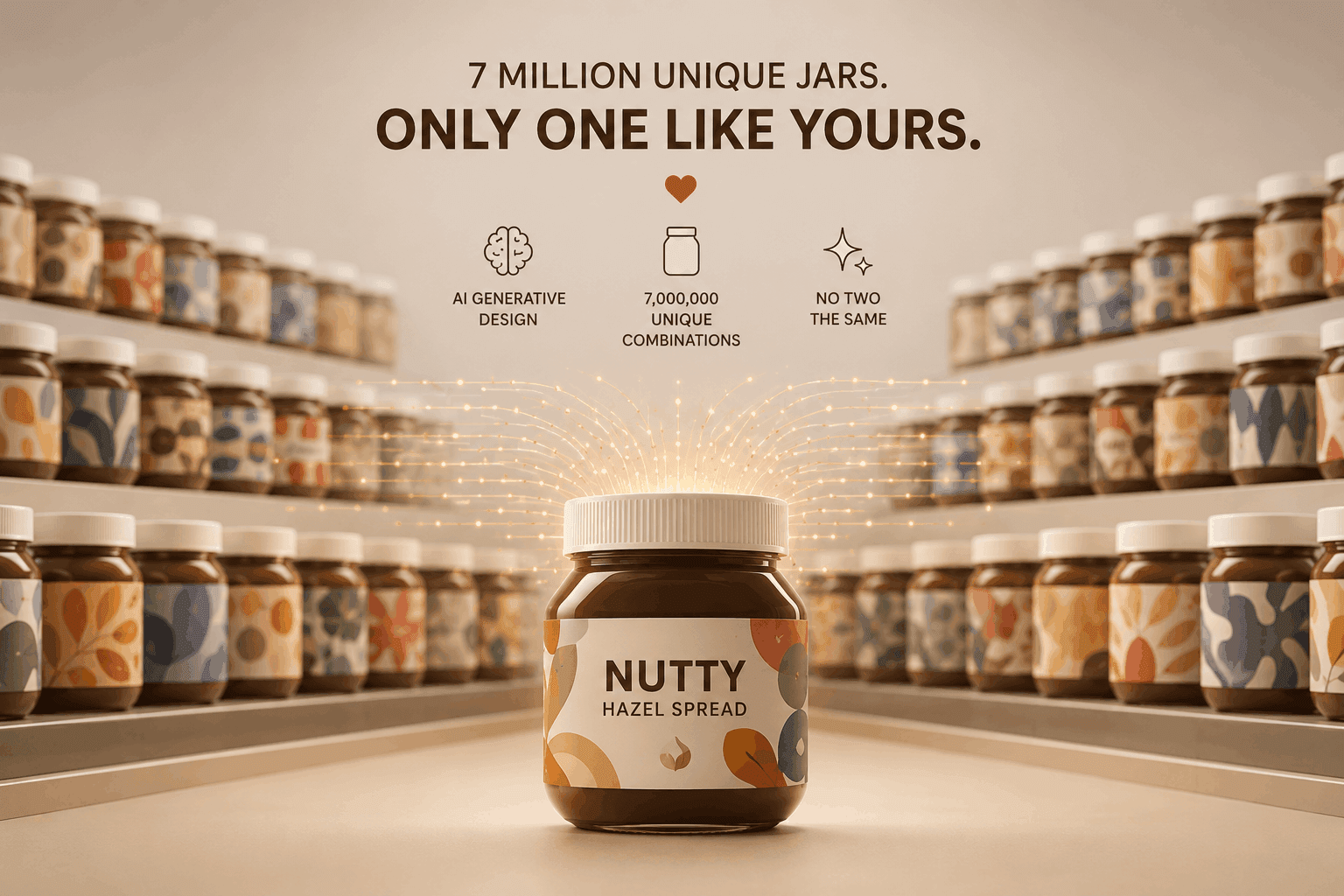
Personalization has become one of the biggest themes across modern AI ad success stories. Nutella showed how AI can transform even physical packaging into a large-scale advertising experience.
The Challenge
Nutella faced a challenge common to mass-market brands. The company wanted to create a sense of personal connection with a product that millions buy without much thought. The goal was to make a familiar item feel worth seeking out, sharing and talking about without changing the product itself.
The AI Strategy
For its Italian "Unica" campaign, Nutella used generative algorithms to produce seven million unique jar label designs, each one a distinct combination of patterns, colors and visual elements. No two jars were the same. The labels turned an everyday grocery item into something collectible, and consumers responded by hunting for their designs and sharing them online. The social amplification was organic, driven by the novelty of the product itself rather than paid distribution.
Results
All seven million jars sold out, while the campaign generated significant social engagement and brand visibility. The campaign also became one of the most recognizable examples of AI in advertising 2025 discussions around personalization at scale.
Key Takeaway
Personalization at this scale would have been operationally impossible through traditional production. Nutella used generative AI to do something structurally simple — in this case, label variation — but the effect on consumer behavior was significant. The product became a reason to engage rather than remain an everyday purchase.
Case Study #5: Starbucks Built Personalization Into Its Operations — And Its Ads
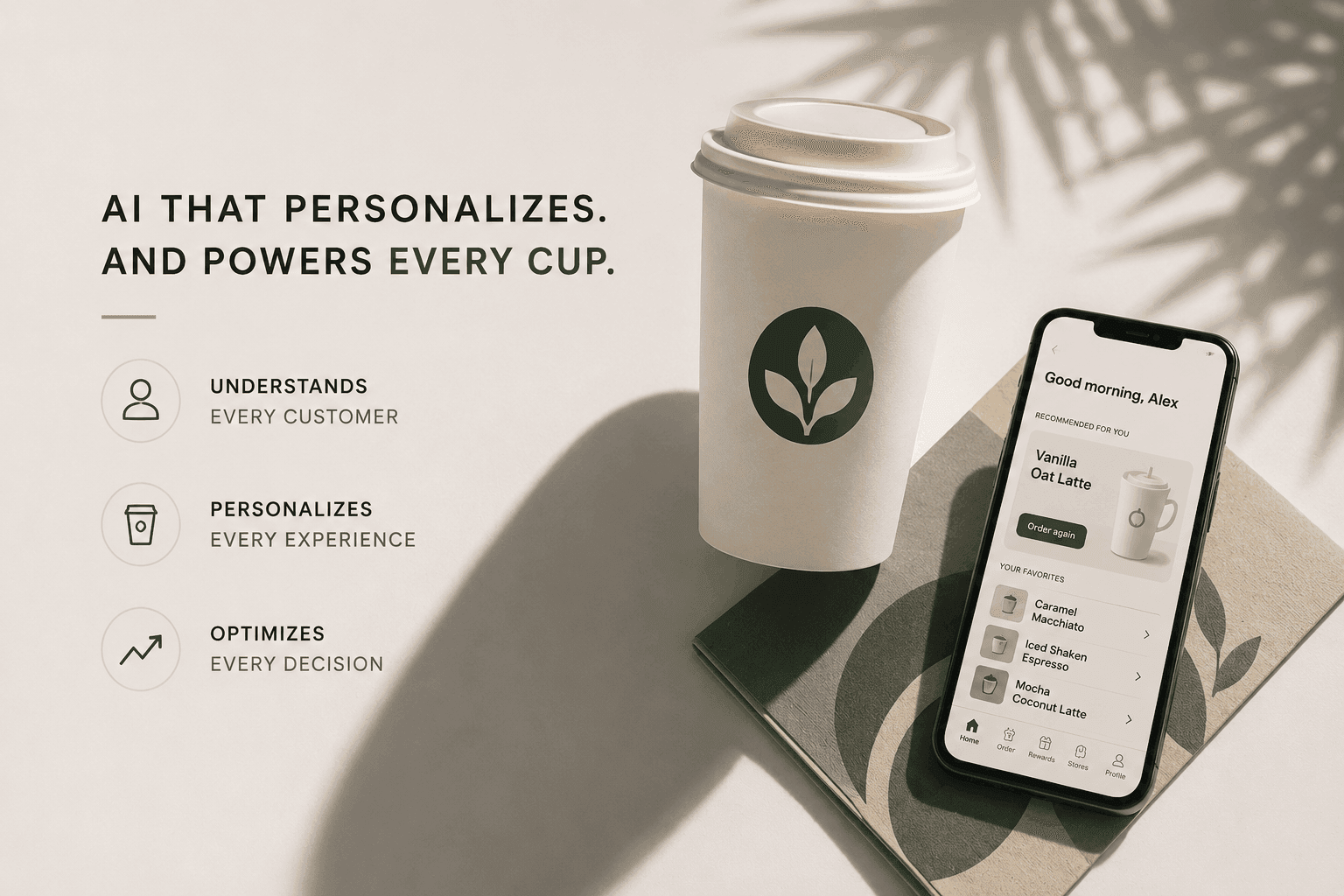
Many examples of AI in advertising focus only on creatives or campaign automation. Starbucks approached AI differently by integrating it into both marketing and customer experience through its “Deep Brew” platform.
The Challenge
Starbucks operates at a scale where personalization is difficult to deliver consistently. The challenge was to make recommendations feel relevant and timely across millions of app users and loyalty members without the experience feeling mechanical or generic.
The AI Strategy
Starbucks built its AI strategy around a proprietary platform called Deep Brew, which pulls together purchase history, behavioral data, location signals and ordering patterns to generate personalized recommendations inside the app and loyalty ecosystem.
What separates Deep Brew from a standard recommendation engine is its operational scope. The same platform also supports inventory forecasting, equipment maintenance scheduling and demand planning across physical stores. Personalization and operations run through the same system, which means customer-facing improvements and back-end efficiency are managed on a single platform.
Results
AI helped Starbucks improve personalization, streamline operations and create a more consistent customer experience across digital and in-store environments. The initiative is now widely referenced in AI advertising examples because it combines marketing personalization with operational efficiency instead of treating them separately.
Key Takeaway
Starbucks treated personalization as an operational problem. By connecting customer-facing recommendations with store-level planning through a single platform, the company created consistency that most AI-driven marketing initiatives don't achieve.
What the Strongest Campaigns Had in Common
The industries may look completely different, but the strongest AI advertising examples tend to follow similar patterns.
AI Speeds Up Learning Cycles
Manual optimization, such as creative tests, placement reviews, bid adjustments, runs on weekly cycles at best, which means they all happen with a delay. AI compresses that feedback loop into something that is continuous; by doing so, campaigns adapt to performance signals before they become expensive problems.
Personalization Drives Higher Engagement
Across all five campaigns, personalization showed up in different forms:
- unique product designs;
- individualized recommendations;
- data-driven storytelling;
- automated creative rotation.
While the format varied, the underlying logic was consistent. The more the experience matched the audience, the stronger the response.
Automation Helps Reduce Wasted Spend
Efficiency gains in these campaigns came from spending better. AI-powered bidding, traffic filtering and predictive targeting reduced the share of budget going to placements and audiences unlikely to convert, which is where most native campaigns quietly lose margin.
Strong AI Campaigns Still Depend on Human Creativity
None of these campaigns led with the technology. Heinz had a brand insight. Nike had a story worth telling. Nutella had a mechanic that made the product feel personal. While AI made each of those ideas executable at scale, the ideas came first. That sequencing matters, and it's where a lot of AI-driven campaigns get it wrong.
Best Practices for Running AI-Powered Native Advertising Campaigns
AI optimization works with the inputs it receives. A strong campaign foundation, like creative variety, clear conversion goals, reliable tracking, allows automated systems to more effectively build on the campaign. These practices separate those that scale well from those that plateau early.
- Start with broader targeting: Narrow audience constraints limit the data AI systems need to identify patterns and high-intent segments. Wider initial parameters give algorithms room to learn before tightening toward better-performing audiences.
- Test more creatives than feels necessary: Large creative sets — multiple headlines, images and CTA combinations — give algorithms more signal to work with. The winning variation is rarely the one you'd have picked manually.
- Refresh creatives on a regular schedule: Once fatigue sets in, native ad performance deteriorates faster than most advertisers expect. Consistent creative updates maintain CTR and keep optimization stable over longer campaign runs.
- Extend AI beyond the ad itself: Some of the strongest ROAS improvements come from combining predictive targeting with post-click optimization: dynamic landing pages, personalized messaging, CTA testing. The click is only part of the conversion path.
- Move to automated bidding once conversion data is stable: AI bidding models need reliable signals to optimize effectively. Starting with manual bidding and transitioning gradually gives the system enough history to make meaningful adjustments.
- Prioritize traffic quality over raw volume: Scaling spend doesn't automatically improve results. AI-powered filtering and contextual matching help ensure the budget goes toward placements and audiences that actually convert.
- Keep creative strategy in human hands: AI accelerates testing and execution, but it optimizes toward what's already there. Campaign ideas, messaging direction and brand consistency still require deliberate human judgment, and that's where most of the leverage actually sits.
The Real Advantage Isn't the Technology
The five campaigns in this article span different industries, budgets and objectives, but the underlying dynamic is consistent. Rather than replacing the strategic work, AI made execution faster, optimization more precise and scaling less dependent on manual intervention.
The tools are widely available at this point. What separates campaigns that perform from those that don't is how deliberately they're applied with clear goals, strong creative inputs and realistic expectations about what automation can and can't do on its own.
FAQ
How does AI improve native advertising campaigns?
AI improves native campaigns across several layers simultaneously: targeting, creative testing, bid management and traffic filtering. The biggest practical advantage is speed. Optimization that previously required days of manual analysis now happens continuously, allowing campaigns to adapt to performance signals in real time.
What results can AI-powered campaigns achieve?
Results vary significantly by vertical, budget and campaign maturity, but common improvements include higher CTR, lower CPA and stronger ROAS. The Bedrop case in this article saw CPA drop by over 76% and ROAS increase by nearly 300%; although, those figures reflect a well-structured optimization process, not just the technology alone.
Are AI native ads only for large brands?
No. While large brands have more data to work with, AI optimization tools are accessible across budget levels. Smaller advertisers often see proportionally strong results because automation helps them compete more efficiently without large media buying teams.
How does MGID use AI in native advertising?
MGID applies AI across the full campaign lifecycle: predictive targeting to identify higher-intent audiences, automated bidding through CPA Tune, creative performance scoring via CTR Guard, contextual matching for placement relevance and traffic filtering to reduce invalid or low-quality visits.
Do I need many creatives to use AI effectively?
More creative variations give AI systems more signals to optimize against, which generally leads to better performance. That said, quality matters more than volume: a large set of weak creatives won't produce strong results. AI can also assist with generating variations, but the core messaging and visual direction still benefit from deliberate human input.