The smartest ad targeting in 2026 may have less to do with who is looking at the screen and more to do with what they're looking at right now.
For years, digital advertising became obsessed with knowing everything about the person behind the screen. Contextual targeting asks a much simpler question: what are they interested in right now?
That question matters more than ever in 2026. Cross-site tracking is increasingly restricted, privacy expectations are higher and advertisers still need relevance without following people around the internet.
Meanwhile, contextual advertising has gotten much smarter. AI can now understand meaning, sentiment and intent rather than simply match keywords, turning contextual targeting from a privacy workaround into a powerful way to reach people based on what has their attention right now.
- Why Contextual Targeting Is the Future of Digital Advertising
- What Is Contextual Targeting?
- How Does Contextual Targeting Work in 2026?
- AI-Powered Contextual Targeting
- Contextual Targeting vs. Behavioral Targeting in 2026: Which Wins?
- The Benefits of Contextual Targeting
- Why Advertisers Choose MGID Contextual Intelligence
- Contextual Targeting Performance Benchmarks (2024–2026)
- How to Set Up Contextual Targeting in MGID
- Best Practices for Contextual Advertising in 2026
- Contextual Targeting Challenges and How to Deal With Them
- Contextual Targeting Across Industries
- Contextual Targeting Glossary
- Contextual Targeting FAQ
Why Contextual Targeting Is the Future of Digital Advertising
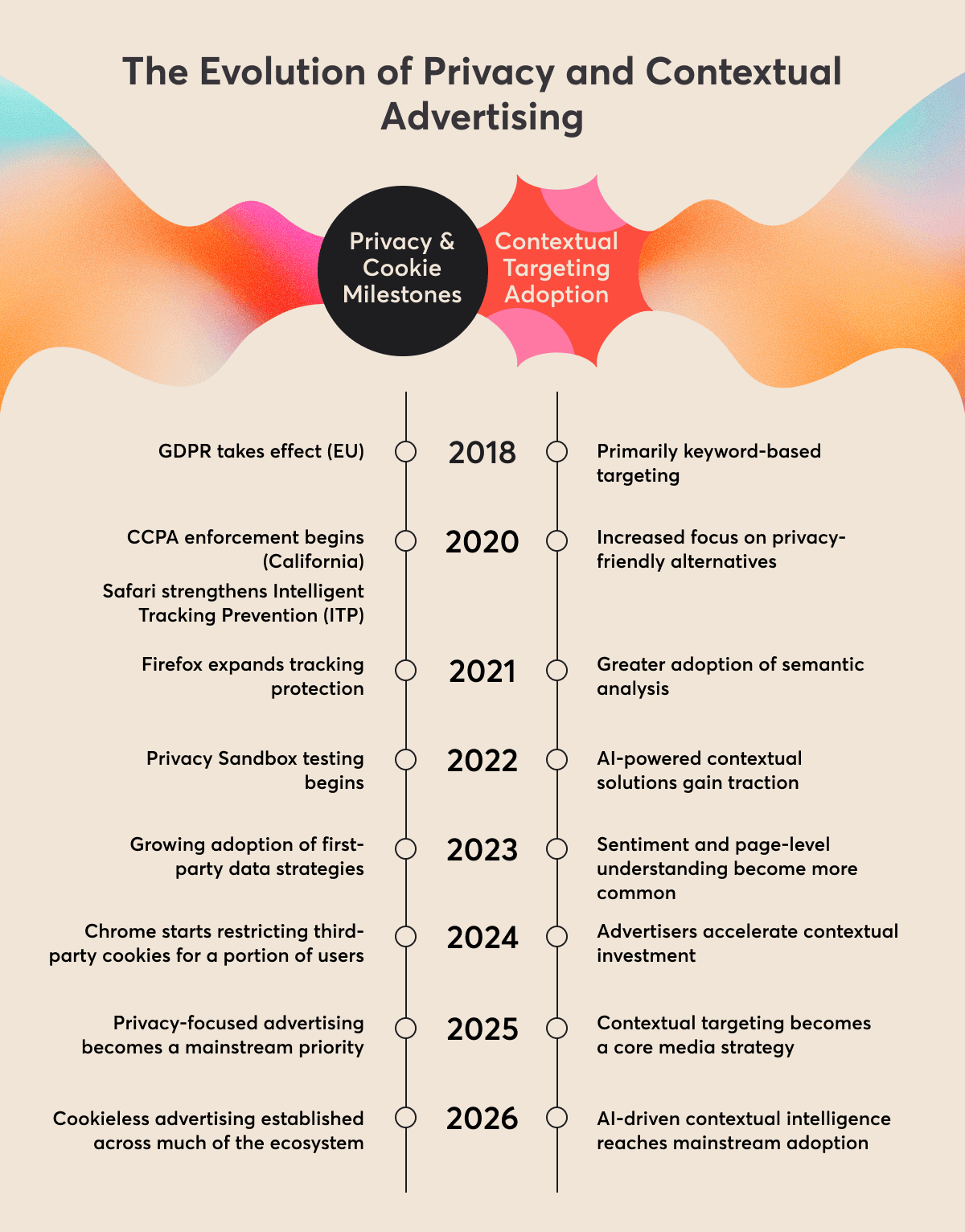
If you're still building your ad strategy around third-party cookies, you have a problem. Cookies have already disappeared in many places, making this a present-day reality rather than a future concern. Safari and Firefox blocked them years ago. Chrome is tightening restrictions. Regulators are pushing harder. And users have been installing ad blockers for a decade.
For years, the industry talked about the cookieless future like it was something on the horizon. In 2026, it's not the future anymore. It's the present, and contextual targeting has moved from a fallback option to the primary strategy.
Why now? Three things changed:
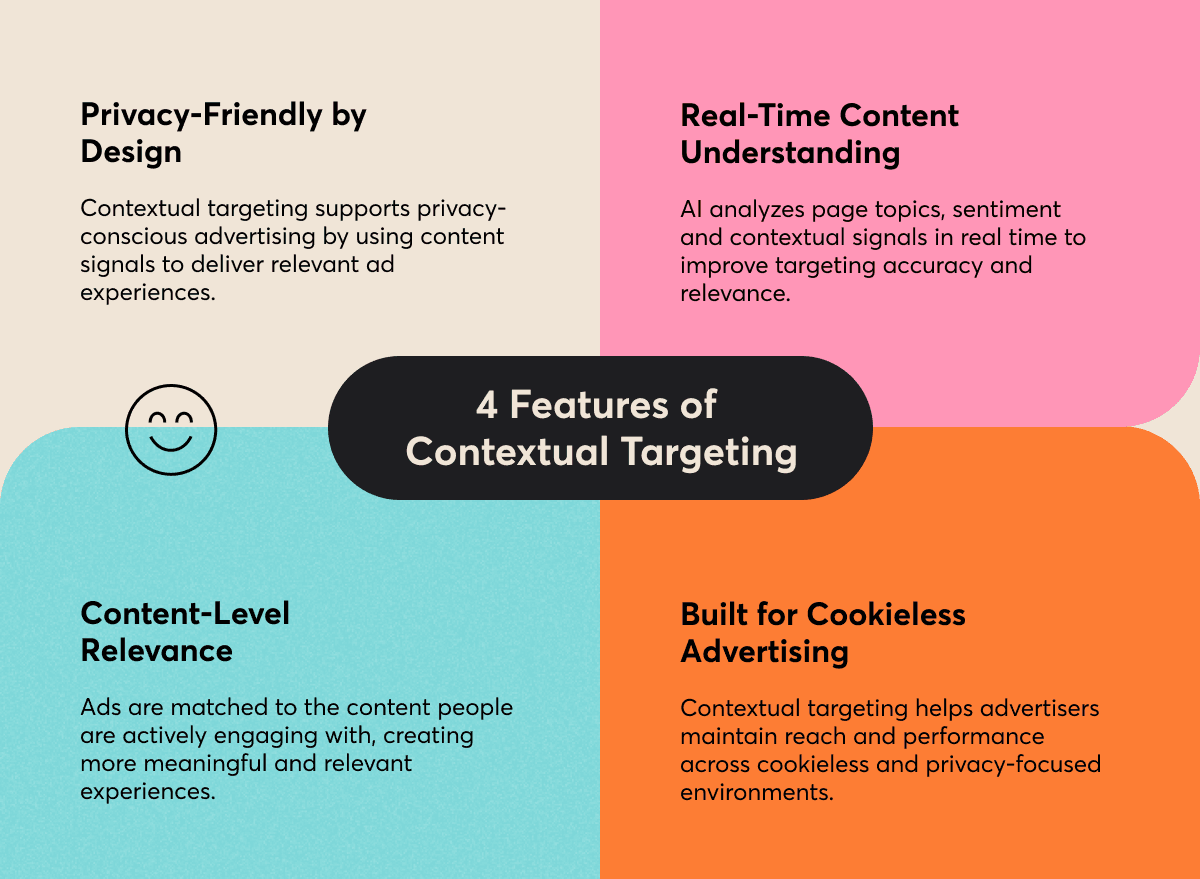
- AI made contextual targeting actually precise: Old-school contextual meant keyword matching, blunt and often wrong. Modern contextual means understanding what a page is genuinely about: its topic, tone, sentiment and what kind of reader is likely there.
- Privacy-first advertising is no longer optional: GDPR, CCPA and a growing list of regional regulations have made behavioral targeting increasingly risky, legally and reputationally. The cost of getting it wrong keeps rising.
- Brands are seeing real results: Contextual advertising placed alongside relevant content isn't just a compliant alternative. In many campaigns, it's outperforming cookie-based targeting on engagement, brand safety and media efficiency.
The shift has already happened. The question now is how well your strategy reflects it.
What Is Contextual Targeting?
Unlike traditional methods that rely on user data and cookies, contextual targeting assesses the context and subject matter of a webpage to determine the most relevant ads to display. This approach ensures that advertisements are aligned with the viewer’s interests at that specific moment.
For example, if a user is reading an article about travel destinations, contextual targeting would display ads related to travel, tourism or related products and services.
Instead of relying on personal data or browsing history, contextual targeting analyzes a webpage's topic, meaning and context to determine which ads are most relevant. Modern contextual advertising platforms use AI to go far beyond simple keyword matching, analyzing content categories, sentiment and page relevance to deliver more accurate placements.
Here are the most common types of contextual targeting.
| Type | How it works | Precision |
|---|---|---|
| Keyword targeting | Ads matched to specific words within content | Basic |
| Category targeting | Ads placed within predefined content categories | Medium |
| Semantic targeting | AI analyzes meaning, tone and intent | High |
How Does Contextual Targeting Work in 2026?
Modern contextual targeting reads a page the way a human would, understanding what the content is about, what mood it sets and what kind of reader is likely there.
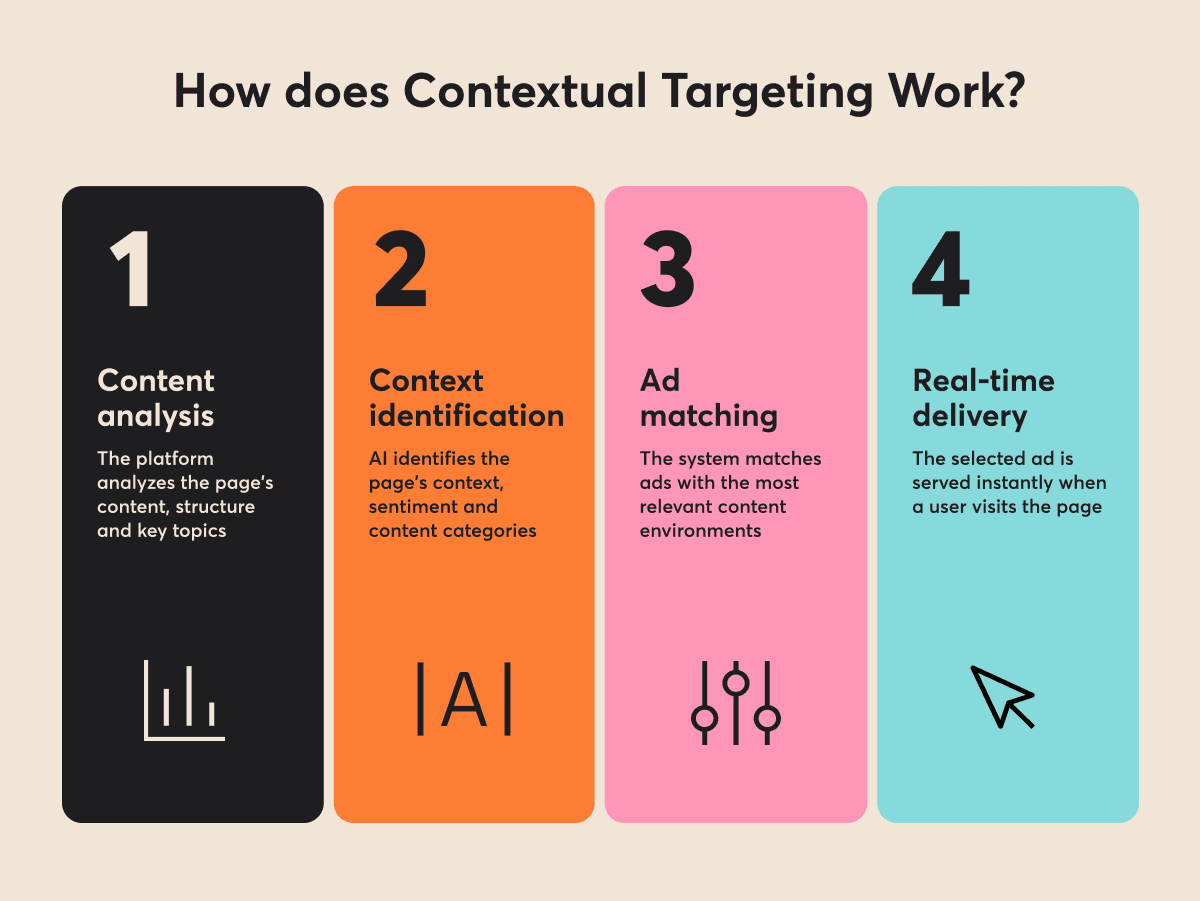
The process happens in real time, every time a page loads:
- The platform analyzes the webpage’s content, including its text, structure and key topics.
- It identifies the page’s context, sentiment and content categories.
- Based on this analysis, the system matches ads with the most relevant environments.
- The selected ad is then served instantly when a user visits the page.
Because every decision is based on the content itself, there is no need for browsing history, personal profiles or third-party cookies: just relevant advertising delivered in the right context, at the right moment.
AI-Powered Contextual Targeting
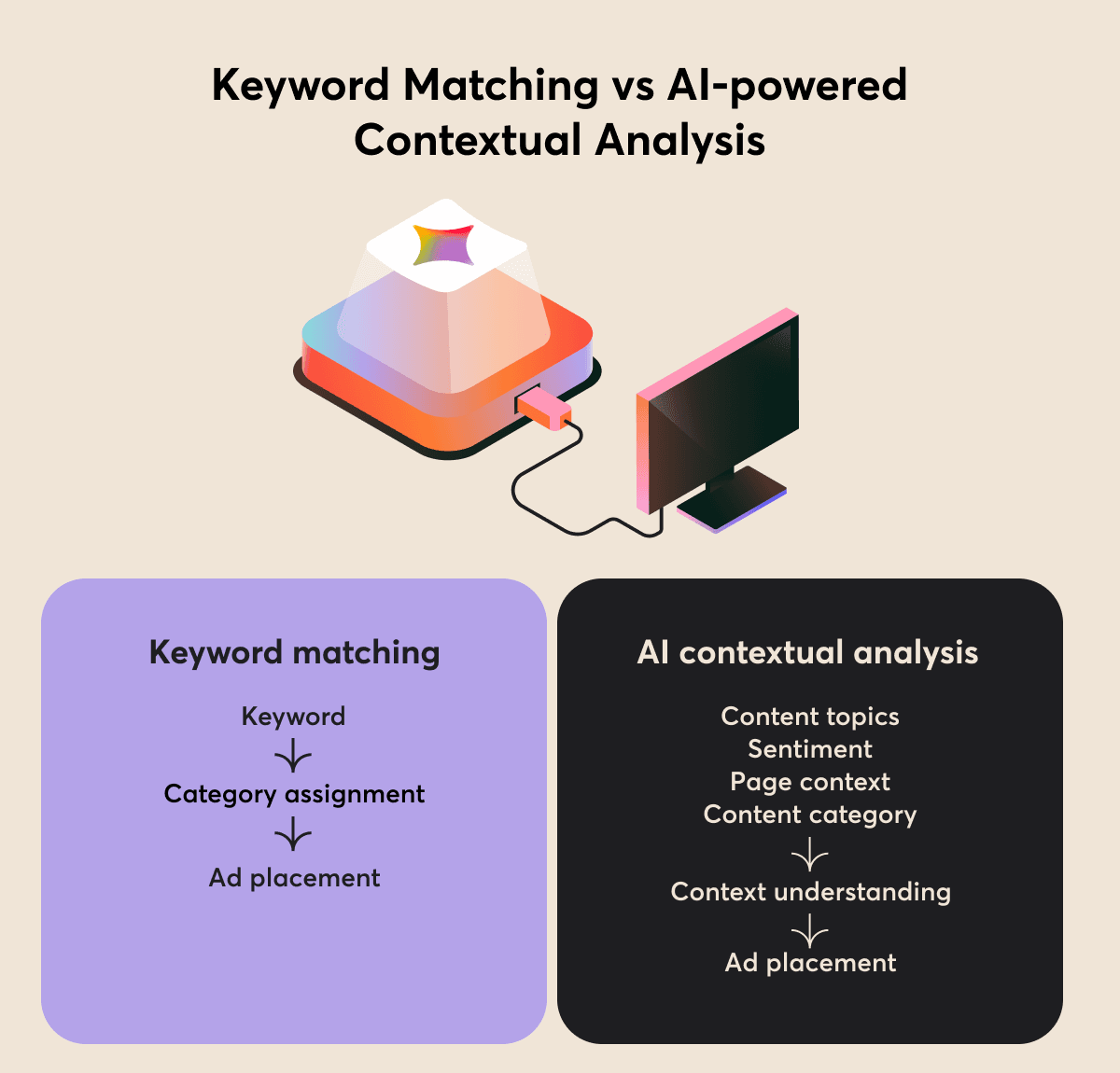
Contextual targeting has come a long way from matching ads to keywords on a page. The word "fitness" can appear in a weight-loss success story, a medical journal or an obituary for an athlete. A keyword match treats all three the same. AI doesn't.
Modern contextual advertising platforms analyze the full meaning of a page to understand what the content is actually about and whether it's the right environment for a given ad. This allows advertisers to reach relevant audiences even when exact keywords aren't present.
Today's systems use a combination of technologies to make that happen:
- Semantic analysis to understand topics and relationships between concepts.
- Natural language processing (NLP) to interpret page meaning and intent.
- Sentiment analysis to identify whether content is positive, neutral or negative.
- Brand safety filters to avoid unsuitable or sensitive environments.
At MGID, Contextual Intelligence combines all of these into a single real-time engine, analyzing content relevance, sentiment and contextual signals to match ads with the most appropriate placements with no third-party cookies required.
Contextual Targeting vs. Behavioral Targeting in 2026: Which Wins?
Both approaches help advertisers reach relevant audiences. The difference is in how they get there.
Contextual targeting focuses on the content a user is consuming at that moment.
Behavioral targeting builds on what a user has done across the web over time: sites visited, searches made, purchases completed. While powerful in theory, it relies on third-party data and personal profiles.
In 2026, that distinction matters more than ever. Growing privacy regulations and the decline of third-party cookies are pushing advertisers toward strategies that don't depend on tracking users across the web.
| Factor | Contextual Targeting | Behavioral targeting |
|---|---|---|
| Reliance on third-party cookies | Low / None | High |
| Level of privacy protection | High | Lower |
| Degree of brand safety control | Strong | Moderate |
| Regulatory exposure | Low | Higher |
| Effectiveness in cookieless environments | High | Limited |
| Relevance at the moment of exposure | High | Depends on user data |
The Benefits of Contextual Targeting
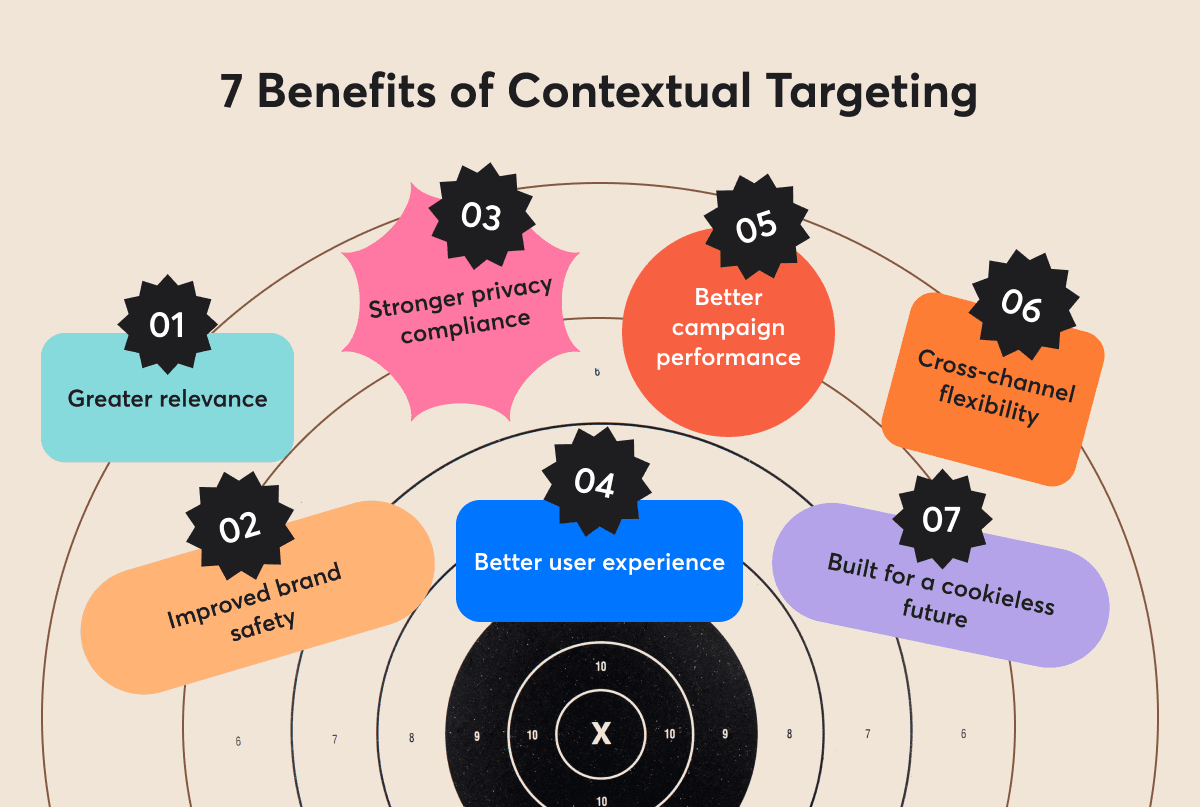
Contextual targeting helps advertisers reach relevant audiences without relying on third-party cookies or personal data. As privacy regulations continue to tighten, that's what keeps campaigns running in environments where behavioral targeting simply can't.
Greater Relevance
Ads appear alongside content users are already actively engaged with. The timing is natural: someone reading about travel is already in the right mindset to consider a flight deal or travel insurance.
Improved Brand Safety
Contextual targeting gives advertisers clear visibility into where their ads appear, helping ensure placements align with brand values and reducing the risk of appearing next to unsuitable content.
Stronger Privacy Compliance
Since targeting decisions are based on content rather than personal data, campaigns can remain aligned with GDPR, CCPA and future privacy regulations without constant legal scrutiny.
Better User Experience
Ads that match the content being consumed feel more relevant and less intrusive. Instead of following users across the web, contextual targeting delivers messages that fit naturally into the browsing experience.
Better Campaign Performance
Relevance improves user experience and drives results. By aligning ads with user intent in the moment, contextual targeting can improve engagement, traffic quality and overall campaign efficiency.
Cross-Channel Flexibility
The same contextual approach can be applied across websites, mobile apps, video platforms and other digital environments, making it easier to maintain a consistent targeting strategy.
Built for a Cookieless Future
As privacy requirements continue to evolve and third-party cookies become less reliable, contextual targeting provides a scalable way to maintain reach, relevance and performance across digital environments.
Why Advertisers Choose MGID Contextual Intelligence
MGID's Contextual Intelligence combines AI-powered content analysis, sentiment detection and contextual signals to identify high-quality advertising opportunities in real time.
The technology evaluates page relevance, content categories and sentiment to help advertisers reach the right audiences in suitable environments without relying on personal data or third-party cookies.
By combining contextual signals, sentiment analysis and AI-powered content understanding, MGID helps advertisers move beyond basic contextual targeting and identify opportunities that are both relevant and brand-safe.
Contextual Targeting Performance Benchmarks (2024–2026)
Contextual targeting isn't just a privacy-friendly alternative to cookie-based advertising: it delivers strong performance across key campaign metrics. In 2025–2026, AI-powered contextual solutions have closed the performance gap with behavioral targeting, often outperforming it in cost efficiency and brand safety.
Recent industry research shows why contextual targeting continues to gain traction as the industry moves beyond third-party cookies.
Higher Purchase Intent and Engagement
Contextually relevant ads generate 43% higher purchase intent and 2.2x higher engagement rates compared to non-contextual placements. When ads appear alongside content users are already interested in, they're more likely to capture attention and drive action.
Lower Advertising Costs
Contextual targeting can help improve media efficiency, with advertisers reporting up to 48% lower CPCs and 20–30% lower CPMs compared to behavioral targeting strategies. This allows brands to reach relevant audiences while making better use of their advertising budgets.
Stronger Brand Safety
Brands using contextual targeting experience 48% fewer brand safety incidents than those relying primarily on audience-based targeting. AI-powered content analysis helps advertisers avoid unsuitable environments and maintain greater control over where ads appear.
Consumer Preference Is Clear
According to research, 94% of consumers prefer ads that are relevant to the content they're viewing over ads based on their browsing history. This highlights the growing importance of contextual relevance in a privacy-first advertising landscape.
A Fast-Growing Market
As advertisers adapt to a cookieless future, contextual advertising continues to gain momentum. The market is projected to grow at a 13.8% compound annual growth rate (CAGR) through 2030, making it one of the fastest-growing areas of digital advertising.
Cookieless Environment Impact
Cookieless CPMs are 22% lower on average than cookie-based CPMs: a gap that narrowed from 34% in 2023, thanks to improved contextual and first-party solutions (Index Exchange, 2024).
In cookieless environments, contextual targeting maintains full audience reach where behavioral targeting loses 30–60% of addressable inventory due to third-party cookie deprecation.
Key Takeaway
While results vary by industry, audience and campaign objectives, the pattern is consistent: AI-powered contextual targeting delivers more than compliance. The benefits include:
- Higher purchase intent and engagement.
- Better brand safety (48% fewer incidents).
- Lower costs (20–48% cheaper CPC/CPM).
- Full reach in cookieless environments.
- Strong consumer preference (94% prefer contextual ads).
How to Set Up Contextual Targeting in MGID
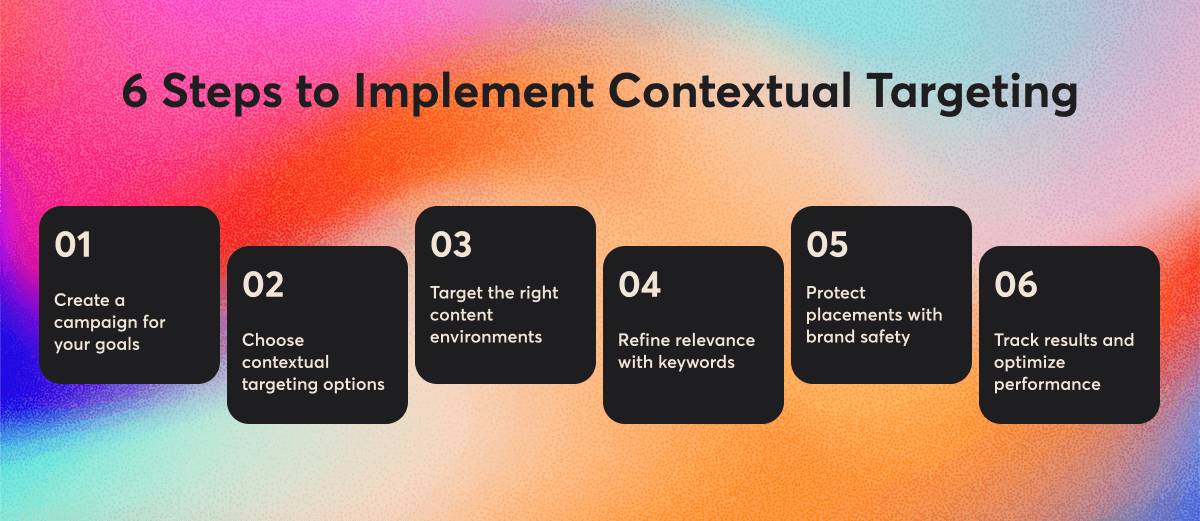
Getting started is more straightforward than most advertisers expect. Here's how it works step by step.
1. Create a Campaign
Log in to your MGID account and set up a new advertising campaign.
2. Select Contextual Targeting
Choose contextual targeting options based on your campaign goals and the audience you want to reach.
3. Choose Relevant Categories
Choose content categories that closely match your offering. The more precise your selection, the more relevant the placements are likely to be.
4. Add Keywords and Exclusions
Define keywords to sharpen targeting precision and use exclusions to filter out content environments that aren't a fit for your brand.
5. Configure Brand Safety Settings
Apply brand safety controls to make sure your ads appear only in suitable, high-quality environments.
6. Launch and Optimize
Monitor performance and refine your targeting based on real engagement and conversion data. MGID's Contextual Intelligence continuously analyzes content relevance and contextual signals to surface better placements over time.
Best Practices for Contextual Advertising in 2026
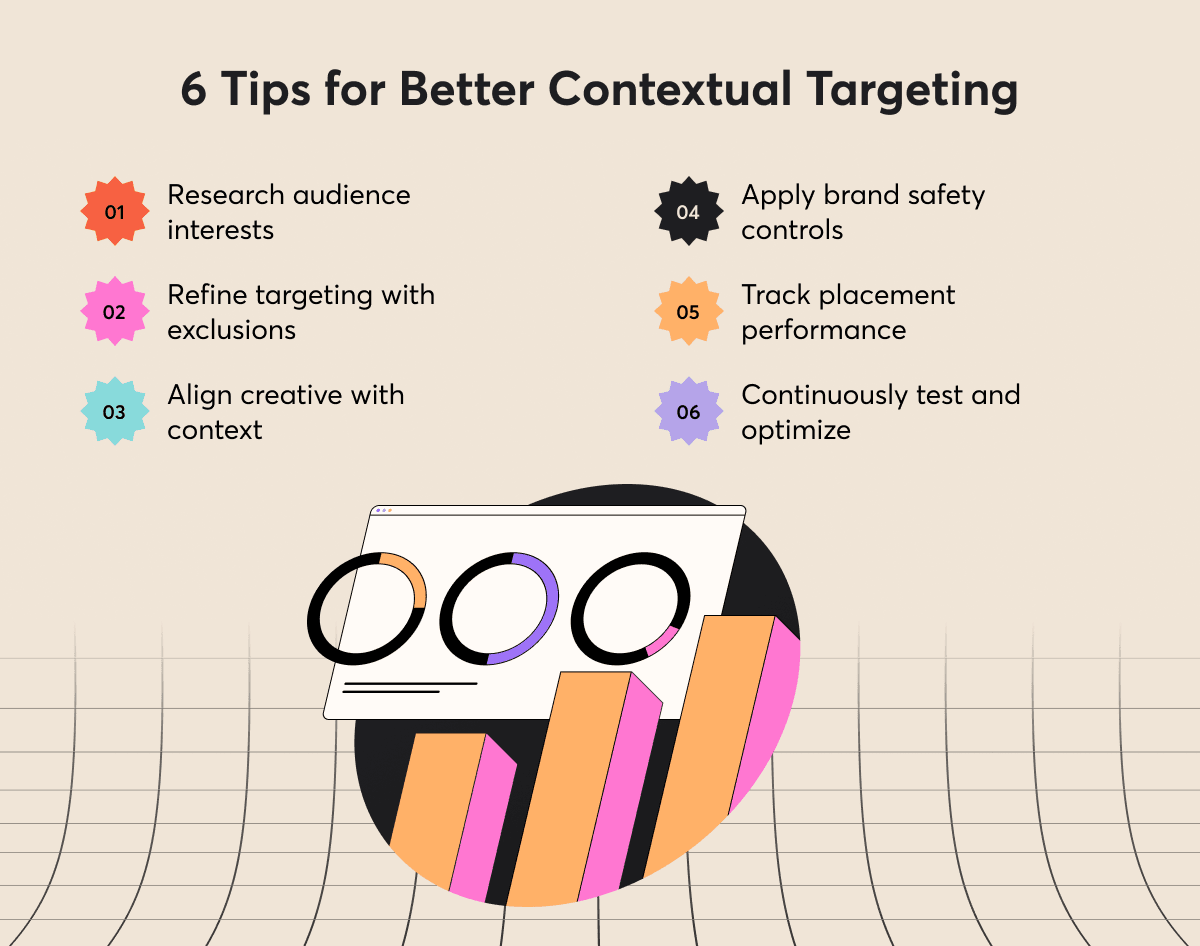
Setting up a campaign is one thing. Getting strong results from it is another. These are the practices that actually move the needle.
- Research topics and themes: Think about what your audience is actively exploring and reading, including seasonal interests, industry developments and current events. Modern semantic targeting can identify these contextual connections naturally.
- Use keyword exclusions deliberately: Exclusions are just as important as inclusions. Combine keyword exclusions with content suitability controls to avoid environments that don't align with your brand.
- Match creative to context: An ad performs better when it speaks to what the reader is already thinking about. A fitness brand advertising on nutrition content should lead with health benefits rather than just product features.
- Prioritize brand safety: Set up content filters and suitability controls from the start. Review them regularly, because content environments shift, and what was appropriate last quarter may not be today.
- Monitor placement performance: Overall CTR can hide a lot. Analyze which specific environments drive engagement, conversions and ROAS, then allocate more budget to the placements that perform best.
- Test and optimize continuously: Experiment with different content categories, contextual signals, headlines, creative variations and landing pages to identify what resonates most with your audience and improve performance over time.
Contextual Targeting Challenges and How to Deal With Them
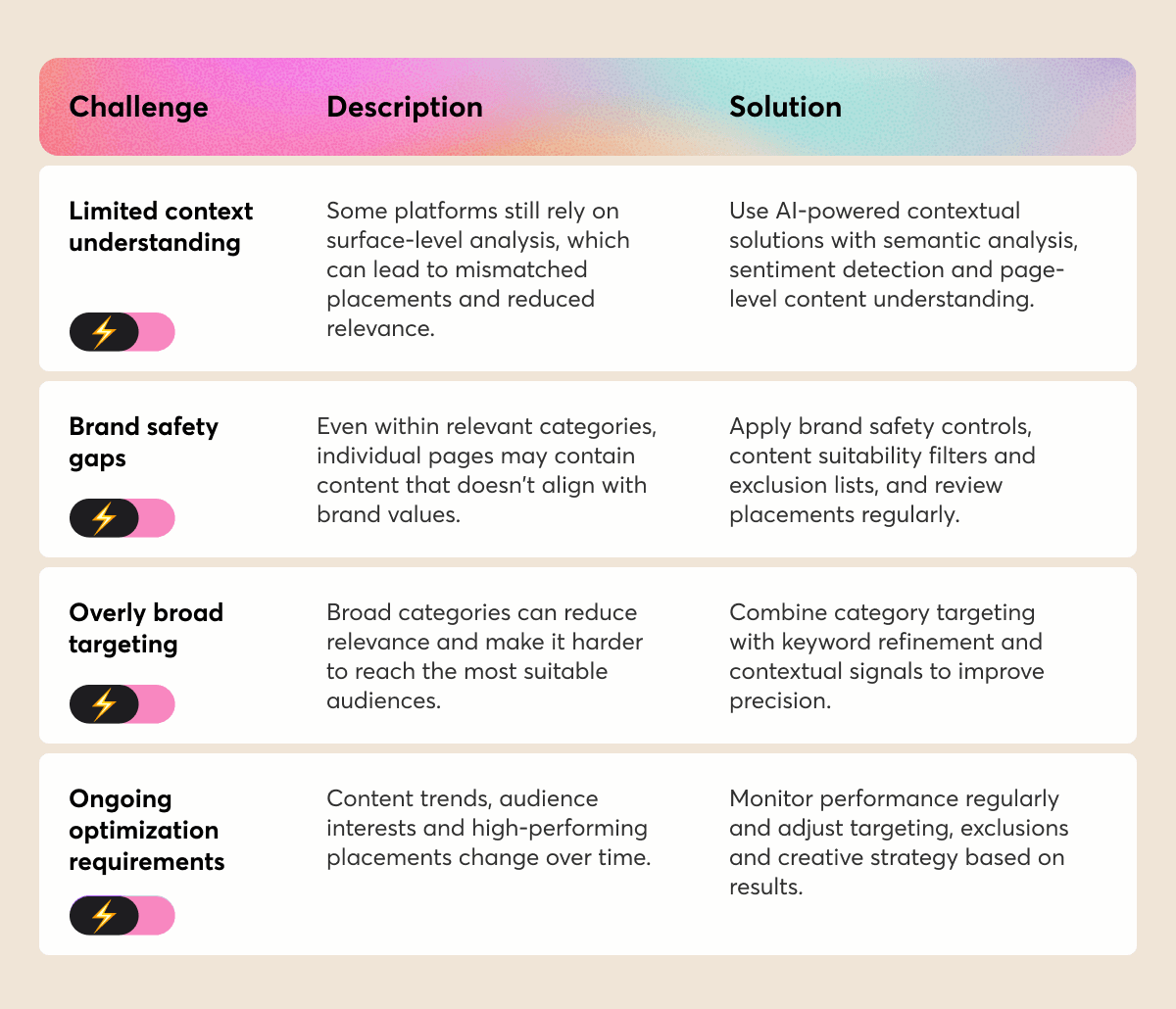
Even with advances in AI and semantic analysis, contextual targeting isn't completely hands-off. Like any advertising strategy, it works best when its limitations are understood and actively managed.
Limited Context Understanding
Some platforms still rely heavily on surface-level analysis, which can lead to mismatched placements: for example, serving a baby product ad on a page that merely mentions the word "family" in an unrelated context.
Solution: Use AI-powered platforms with semantic analysis, sentiment detection and page-level content understanding to improve targeting accuracy.
Brand Safety Gaps
Even when ads appear within the right content category, individual pages may contain topics, language or viewpoints that don't align with your brand. Advertisers also don't always have full visibility into every potential placement.
Solution: Apply brand safety filters, content suitability controls and exclusion lists, and review placements regularly to ensure alignment with brand values.
Overly Broad Targeting
Broad categories can limit relevance. For example, a "Health" category may include everything from fitness training and nutrition advice to discussions of serious medical conditions.
Solution: Combine category targeting with keyword refinement and contextual signals to narrow targeting and improve relevance.
Ongoing Optimization Requirements
Contextual targeting is not a set-it-and-forget-it strategy. Content trends evolve, audience interests shift and high-performing placements can change over time.
Solution: Establish a regular optimization process. Review placement performance, engagement metrics and conversion data, then adjust targeting based on what is delivering results.
Contextual Targeting Across Industries
Contextual targeting works across virtually any industry. Here's what it looks like in practice.
- Travel: A user reading about the best summer destinations in Europe sees ads for hotels, flight deals or travel insurance. Because they're already planning a trip, the ads feel relevant and timely.
- Fitness and wellness: Someone browsing workout guides or nutrition content sees ads for sportswear, fitness equipment or health products that align with their current interests.
- Financial services: A reader exploring personal finance or investment topics is served ads for banking products, investment platforms or financial planning tools while the subject is already top of mind.
- Retail and eCommerce: A user reading product reviews or buying guides sees ads for related products, helping brands reach potential customers while they're actively researching a purchase.
- B2B and SaaS: A professional reading about digital marketing, AI or business productivity sees ads for software platforms and services directly related to those topics.
Example: When Coca-Cola promoted its updated Coke Zero product, the brand used contextual targeting to place ads alongside content discussing the new taste and product experience. The campaign achieved a 17% higher CTR compared to non-contextual targeting approaches, showing how content-level relevance can translate into stronger performance.
This is the core advantage of contextual targeting: reaching people based on what they are actively interested in at that moment, rather than relying on past browsing behavior or personal data.
Contextual Targeting Glossary
Contextual signal
A piece of information used to determine ad relevance, such as page content, keywords, sentiment or content category.
Semantic targeting
A contextual targeting method that uses AI and natural language processing to understand the meaning and intent of content, going beyond individual words to grasp the full context of a page.
Keyword exclusion
A targeting setting that prevents ads from appearing alongside specific words, topics or types of content, used to protect brand reputation and improve placement quality.
Brand safety
A set of controls that ensure ads appear only next to content that aligns with a brand's values and standards. Includes category exclusions, sentiment filters and content suitability settings.
Content category targeting
A method that places ads within predefined content categories such as Travel, Finance, Health or Technology, allowing advertisers to reach audiences based on broad topic relevance.
NLP (Natural Language Processing)
The AI technology that enables contextual platforms to read and interpret written content at a human level, understanding context, tone and intent rather than scanning for surface-level signals.
Contextual Targeting FAQ
What is contextual targeting in advertising?
Contextual targeting is an advertising strategy that places ads based on the content a user is currently viewing. Instead of relying on personal data or browsing history, it matches ads with relevant topics, categories and contextual signals.
How does contextual targeting work without cookies?
Contextual targeting analyzes webpage content rather than user behavior. Modern AI-powered systems evaluate factors such as page topics, sentiment, keywords and content categories to determine which ads are most relevant, eliminating the need for third-party cookies.
What is semantic targeting?
Semantic targeting is an advanced form of contextual targeting that uses AI and natural language processing (NLP) to understand the meaning and intent of content. This allows advertisers to move beyond simple keyword matching and achieve more accurate ad placements.
Is contextual targeting effective?
Yes. Research consistently shows that contextual targeting can improve ad relevance, engagement and brand safety. Advances in AI and semantic analysis have also made contextual targeting significantly more accurate than traditional keyword-based approaches.
Does contextual targeting use personal data?
No. Contextual targeting focuses on the content being viewed rather than on an individual's identity, browsing history or personal profile.
What is the difference between contextual targeting and behavioral targeting?
Contextual targeting focuses on the content being consumed right now. Behavioral targeting focuses on a user's past online activity. As privacy regulations tighten and third-party cookies fade out, contextual targeting has become the more sustainable approach for most advertisers.
Is contextual advertising privacy-friendly?
Yes. Because contextual advertising does not rely on personal data or third-party cookies, it is widely considered one of the most privacy-friendly digital advertising strategies available today.
Which advertising platforms support contextual targeting?
Contextual targeting is available across many advertising platforms and networks, including native advertising, display, video and programmatic solutions. Platforms such as MGID offer advanced contextual targeting capabilities powered by AI and semantic analysis.
Conclusion
Contextual targeting is no longer just a privacy-friendly alternative to behavioral advertising. Thanks to advances in AI and semantic analysis, it has become a practical way to deliver relevant ads, strengthen brand safety and maintain performance without relying on third-party cookies.
As privacy expectations continue to evolve, the ability to reach audiences based on the content they're actively engaging with is becoming increasingly valuable. With solutions like MGID Contextual Intelligence, advertisers can scale contextual campaigns while balancing relevance, performance and privacy.
Ready to get started? Register with MGID and discover how Contextual Intelligence can help you reach the right audiences in the right environments.