Affiliate marketing loves evergreen concepts. These can be offers that convert all year, audiences that are always active or funnels that just need a bit of optimization to keep running. While affiliates consider this the epitome of stability, in reality, even the most stable campaigns are shaped by affiliate marketing seasonality — whether affiliates plan for it or not.
User behavior changes with the calendar as do budgets, intent and competition. For instance, a finance offer that performs smoothly in March can struggle in July, and a wellness product might barely move in October, then spike overnight in January. Ignoring these shifts not only slows growth but also leads to wasted spend, missed revenue windows and rushed decision making when things suddenly (and inevitably) go south. However, seasonality isn’t a problem to fix, rather it’s a pattern to read and employ.
What makes this tricky is that not all seasonal changes look the same. Some are predictable and repeat every year. Others come unexpectedly, triggered by economic pressure, consumer sentiment or sudden shifts in attention. Understanding the difference is what separates reactive affiliates from those who scale with confidence.
What Is Seasonality in Affiliate Campaigns?
At its core, seasonality in affiliate marketing refers to recurring changes in demand, user behavior and competition throughout the year. These changes influence how people search, click and convert — and how much advertisers are willing to pay to reach them.
This applies to both short-lived and long-running offers. While some seasonal affiliate campaigns are built specifically around holidays or events, even so-called evergreen offers experience noticeable ups and downs. Traffic volumes rise and fall. Conversion intent shifts. Ad costs follow their own rhythm.
It’s also important to separate true seasonality from one-off spikes. A Black Friday surge or a New Year’s resolution boom is very different from long-term cycles like summer slowdowns or Q4 e-commerce pressure. Short-term events create sharp peaks. Long-term seasonal cycles quietly reshape seasonal traffic trends over weeks or months.
Affiliates who understand these patterns react to performance changes, anticipating them and adjusting before results start slipping.
Types of Seasonality That Affect Affiliate Campaigns
Seasonality isn’t one-dimensional; in fact, most affiliate campaigns are influenced by several overlapping patterns at once. Understanding which type you’re dealing with helps explain why performance shifts and what to do next.
Calendar-Based Seasonality
This is the most obvious and the easiest seasonal trend to anticipate. Demand spikes around fixed moments in the year when user intent is naturally higher.
Typical examples include:
- Major holidays like Black Friday, Christmas and New Year’s
- Back-to-school periods and summer breaks
- Tax season and year-end financial planning
During these windows, seasonal affiliate campaigns often see sharp traffic increases; however, affiliates also experience heavier competition and rising costs.
Industry-Specific Seasonality
Some verticals follow their own internal calendars, regardless of global holidays. In these cases, seasonal traffic trends are closely tied to both real-life behavior and marketing calendars.
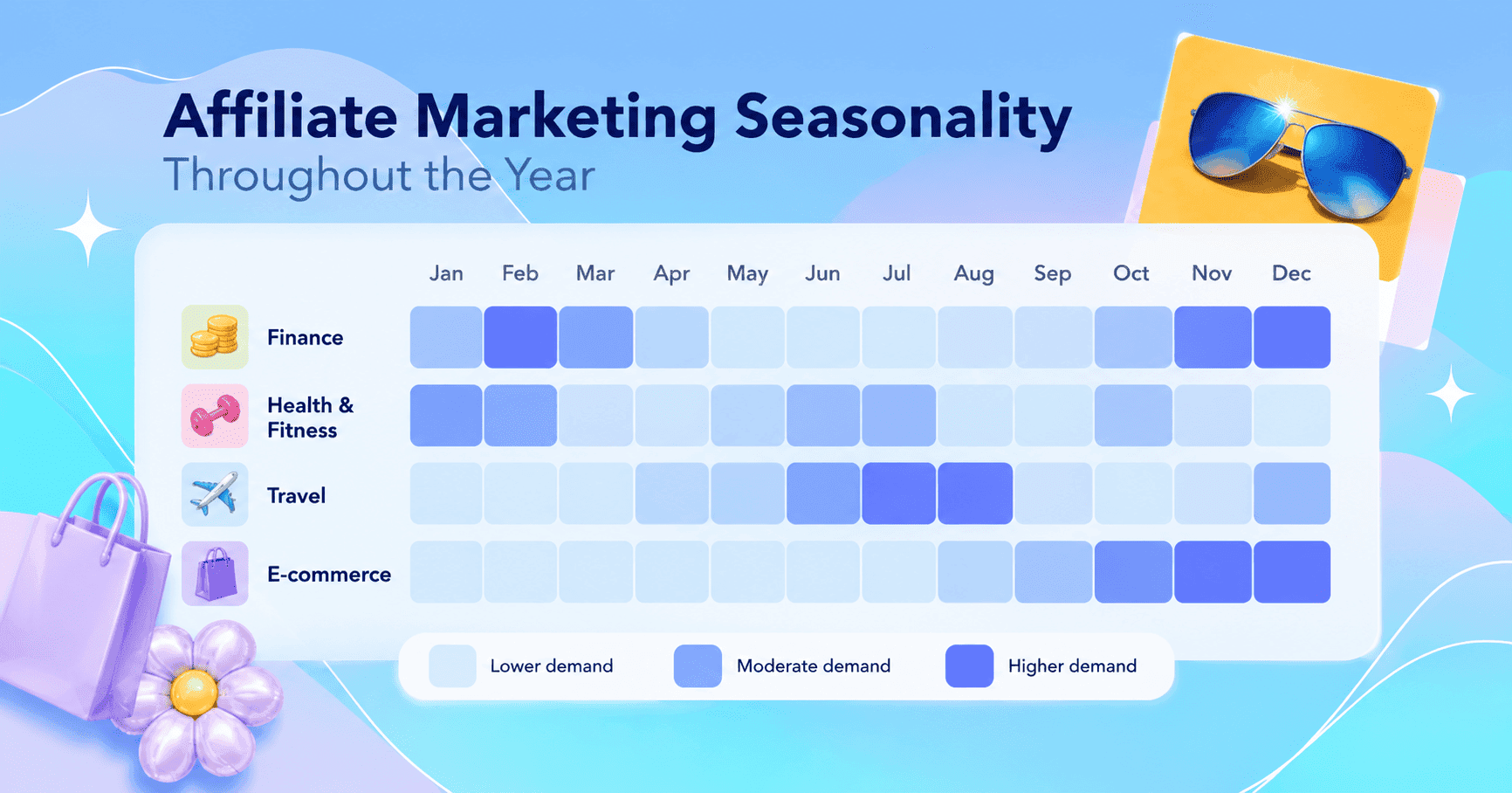
- Finance: Tax deadlines, bonus seasons, end-of-year budgeting
- Health & fitness: New Year’s resolutions and pre-summer motivation
- Travel: Summer vacations, winter holidays, long weekends
- E-commerce: Q4 surges, flash sales, promotional events
Behavioral & Economic Seasonality
Not all seasonal shifts are marked on a calendar, though. Some are driven by how people feel — and how much they’re willing to spend.
Paydays, salary cycles, inflation pressure and consumer confidence all influence purchasing intent. These factors often explain sudden seasonal conversion rate changes, even when traffic volume stays relatively stable.
How Seasonality Impacts Key Affiliate Metrics
Seasonality rarely affects just one metric. It creates a ripple effect across the entire funnel — from clicks to conversions to final ROI.
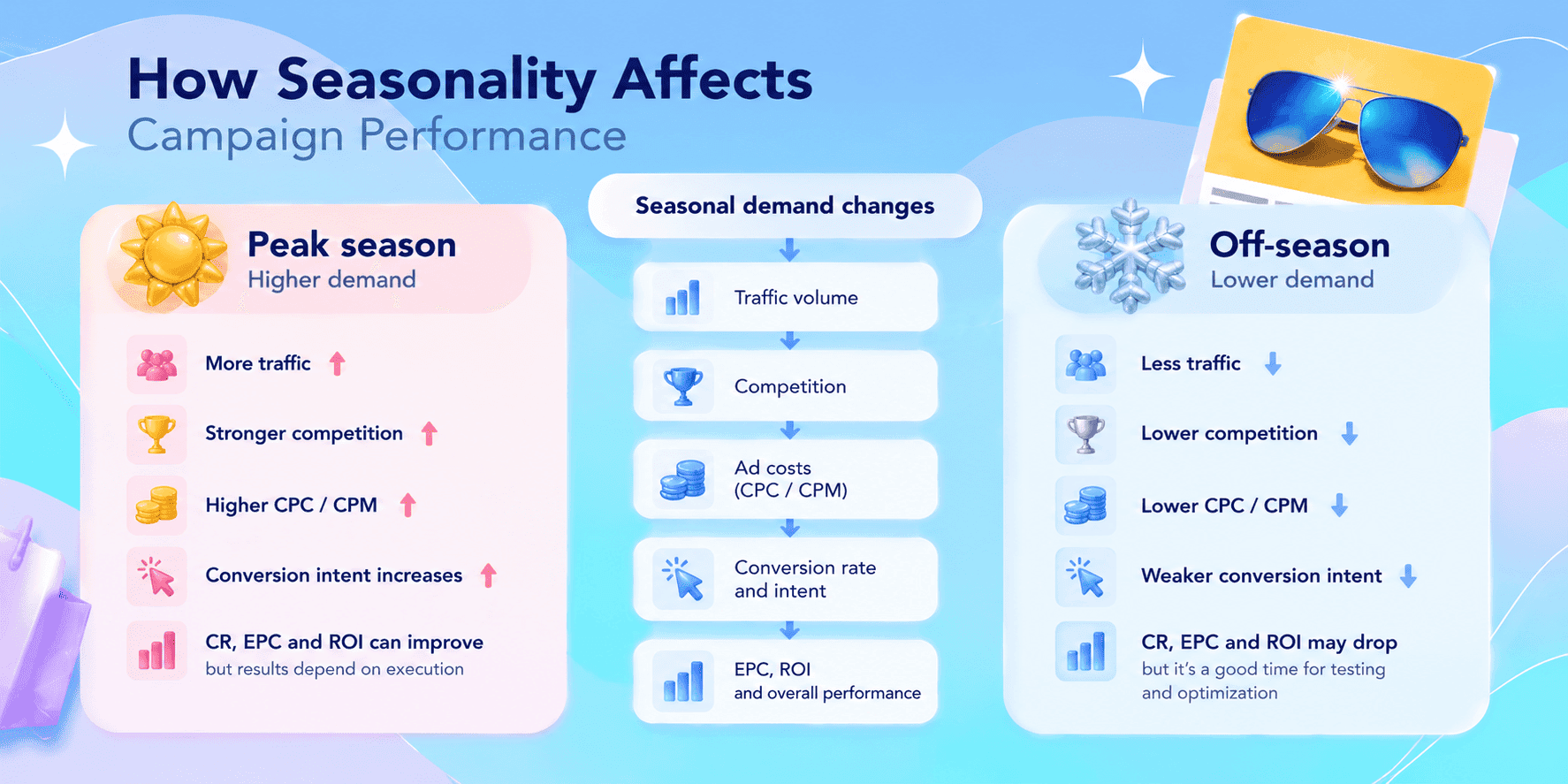
Traffic is usually the first signal. Volume can spike during peak demand or dry up during slower months. Although, higher traffic doesn’t always mean better results. In peak periods, competition intensifies, pushing seasonal ad costs higher and changing how auctions behave.
Common metric shifts affiliates see:
- Noticeable CPC fluctuations by season, especially in competitive verticals;
- Conversion rates rising with intent — or dropping due to rushed creatives;
- Volatility in EPC, ROI and overall competitiveness.
For paid traffic, these shifts are even more pronounced. During high-demand periods, CPMs and CPCs inflate quickly. In quieter months, traffic becomes cheaper — but user intent often weakens. Understanding this balance is key to smart seasonal campaign optimization.
Identifying Seasonal Trends Before They Hit
While seasonality rarely arrives with a warning,t it usually leaves clues if you’re looking in the right places. You don’t have to predict the future perfectly, but you should be able to spot patterns early enough to adjust before performance starts drifting.
Start with your own historical data. Even a few months of results can reveal recurring peaks, dips and “weird weeks” where numbers always wobble. Look at:
- Traffic volume by week/month
- CR and funnel drop-off points
- Top placements and how they behave over time
- Offer performance by device and GEO
This is where seasonal traffic trends become less abstract and more actionable. You might find, for example, that your campaign doesn’t actually slow down in summer. What actually occurs is that it slows down in one GEO, on one device, with one angle that stops resonating.
Next: track external demand signals. Google Trends is the obvious one, but the real value comes from comparing trend curves with your internal performance. If interest is rising but conversions are flat, you may be encountering stronger competition or weaker landing pages, as opposed to a demand issue.
Finally, watch market-level signals. Networks, affiliate managers and vertical benchmarks won’t always share perfect numbers, but they do reflect the broader direction. If everyone in your niche is seeing seasonal conversion rate changes, this is a good indication that it’s not your tracking set up but the season.
Overall, staying ahead of seasonal trends goes beyond guesswork; in fact, the affiliates who win peak periods do so by observing earlier, making preparations and acting swiftly.
Preparing Affiliate Campaigns for Peak Seasons
Peak seasons reward preparation. By the time traffic surges, platforms are already crowded, bids are climbing and learning phases become expensive. This is why the smartest move is to prepare affiliate campaigns for peak season well before demand actually explodes.
The first step is creative planning. What works in a calm period often underperforms once competition heats up. Users are exposed to more ads, scroll faster and make decisions quicker. Creatives need clearer hooks, sharper angles and faster message delivery.
It also helps to lock in operational readiness early:
- Finalize budgets and scaling limits in advance
- Align on bidding rules and performance thresholds
- Make sure tracking and attribution are stable
- Pre-build funnels and landing pages instead of patching them during mid-peak
Testing is another overlooked advantage. Running campaigns at lower volume before the rush allows you to identify strong angles and placements without paying peak prices. When demand spikes, you’re scaling proven setups rather than experimenting under pressure.
Peak seasons amplify everything: wins, losses and inefficiencies. Thoughtful planning turns seasonal campaign optimization into a growth lever rather than a damage-control exercise.
Managing Paid Traffic During High-Competition Periods
When peak season hits, paid traffic becomes less forgiving. Auctions tighten, attention spans shrink and even the smallest of mistakes gets magnified. This is where disciplined execution matters more than aggressive scaling.
Bids and budgets need to stay flexible. Static rules that worked a month ago can quickly become outdated once competition increases. Many affiliates notice sudden CPC fluctuations by season, especially in verticals where multiple advertisers push budgets at the same time. Reacting too slowly often means overpaying for the same users.
Creatives also burn out faster in high-demand periods. Audiences see more ads, more often and across more channels. Refresh cycles need to be shorter, and messaging should adapt to the moment. This means urgency during sales, reassurance during uncertain economic periods or clarity when users are overwhelmed with choice.
A few tactics become especially useful here:
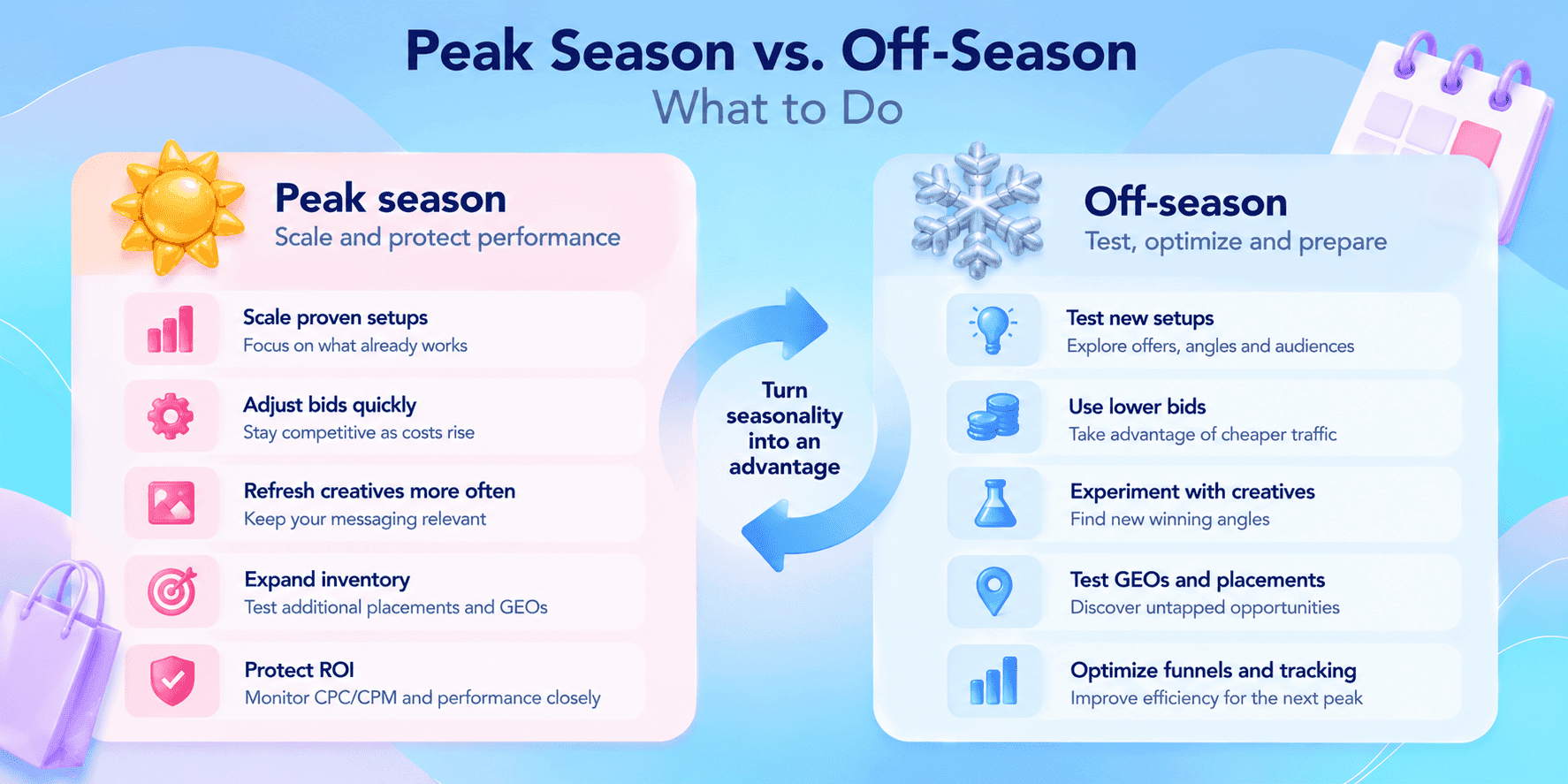
- Adjust bids dynamically instead of relying on fixed caps
- Rotate creatives more frequently to avoid fatigue
- Expand placements or test secondary GEOs to reduce pressure
- Re-evaluate funnels for friction that wasn’t visible before
Native advertising can also play a strategic role during these moments. Compared to more saturated channels, native advertising offers access to broader inventory and contextual placements, helping stabilize native ads seasonal performance when competition peaks elsewhere.
High-competition periods test not only budgets but also decision-making, and affiliates who stay adaptable usually outperform those who simply spend harder.
Off-Season Strategies: Staying Profitable When Demand Drops
Not every slowdown is a failure. In affiliate marketing, quiet periods are part of the cycle — and they can be just as valuable as peak moments if used correctly. When demand softens, the focus shifts from aggressive growth to efficiency and learning.
Lower competition often leads to more favorable seasonal ad costs, making off-peak months a good time to test ideas that felt too risky during peak season. Traffic may be lighter, but it’s also less contested, which creates room to experiment without burning a budget.
Off-season adjustments often include:
- Shifting spend toward evergreen or alternative offers
- Lowering bids and exploring new creative angles
- Optimizing landing pages and funnels for clarity and speed
- Running controlled tests on new GEOs or placements
These periods are also ideal for structural improvements. Reviewing data from previous peaks, cleaning up tracking issues and refining targeting can set the foundation for stronger results and future success.
The biggest mistake affiliates make in slow periods is treating them as downtime. In reality, this is when smart seasonal campaign optimization happens — quietly, deliberately and without the pressure of peak-season pricing.
Common Seasonality Mistakes Affiliates Make
Seasonality itself isn’t what hurts performance. The real damage usually comes from how affiliates react (or don’t react) to it. Many campaigns struggle not because the market changed but because expectations didn’t.
One of the most common mistakes is scaling too late. Affiliates wait for performance to spike, then rush to increase budgets when competition is already at its peak. By that point, learning phases are expensive, inventory is crowded and margins shrink fast.
Another issue is ignoring the drop-off that follows. Peak periods end abruptly; however, budgets and bids often don’t. When affiliates fail to adjust after demand cools, they keep paying peak prices for post-peak intent, which is a fast way to burn profit.
Other patterns show up again and again:
- Overpaying for traffic without refreshing creatives or angles
- Assuming what worked last year will work the same way this year
- Treating all GEOs and verticals as if they follow the same seasonal curve
- Confusing short-term spikes with sustainable growth
Seasonality rewards awareness. Therefore, affiliates who build flexibility into their strategy adapt smoothly. In contrast, those who rely on fixed assumptions usually feel the shift too late when performance has already slipped.
Building a Seasonality-Ready Affiliate Strategy
Handling seasonality means building a system that expects change and adjusts automatically when change occurs. A seasonality-ready strategy gives affiliates room to scale during peaks and stay efficient during slowdowns.
One of the simplest foundations is planning ahead. An annual calendar that maps out expected highs and lows by vertical and GEO helps teams align budgets, creatives and testing windows long before pressure kicks in. This turns affiliate marketing seasonality from a surprise into a planning variable.
Diversification is just as important. Relying on a single offer, GEO or traffic source makes seasonal swings more painful. A mix of evergreen and seasonal affiliate campaigns spreads risk and creates more consistent revenue throughout the year.
Strong strategies also include safeguards:
- Traffic source diversification to reduce dependency on one channel
- KPI-based alerts to catch performance shifts early
- Flexible bidding and budget rules that adjust with demand
- Clear thresholds for scaling, pausing, or pivoting campaigns
Seasonality never looks identical from year to year, but a well-structured system makes those differences manageable — and often profitable.
Future Outlook: Smarter Seasonal Planning with AI
Seasonality is becoming harder to predict with intuition alone. User behavior shifts faster, economic signals change mid-cycle and demand doesn’t always follow last year’s pattern. This is where AI-driven planning starts to matter.
Modern platforms already use machine learning to detect early signals in traffic quality, engagement and conversion behavior. Instead of reacting after performance drops, affiliates can spot seasonal conversion rate changes while they’re still forming and adjust before costs spike or volume fades.
AI-powered tools are also reshaping execution:
- Forecasting demand based on historical and real-time data
- Automatically reallocating budgets as competition intensifies
- Predicting which creatives are likely to fatigue first
- Adapting delivery to sudden shifts in seasonal traffic trends
In native advertising, this approach becomes especially valuable. As inventory and context shift throughout the year, AI helps maintain stable native ads seasonal performance without constant manual intervention.
Seasonality won’t disappear, but smarter systems make it easier to work with — instead of constantly catching up.
Conclusion
Seasonality in affiliate marketing isn’t new: it’s a constant ebb and flow. Demand shifts, competition intensifies, budgets expand and contract. While none of this is new, what determines an affiliate's success is how prepared they are when those shifts arrive.
The difference between stress and scale usually comes down to timing. Affiliates who plan ahead, test early and stay flexible tend to ride peaks with confidence and use slower periods productively. Those who react late often end up chasing results at the most expensive moment.
Seasonality doesn’t need to be guessed or feared. With the right data, realistic expectations and adaptable tools, it becomes manageable — even profitable. Platforms that support flexible bidding, contextual delivery and performance signals make it easier to stay aligned with user intent throughout the year.
The takeaway is simple: preparation beats reaction. Test before demand spikes, adjust before costs climb, and treat every season — busy or quiet — as part of a bigger, long-term strategy.
FAQ
1. What is seasonality in affiliate marketing? Seasonality refers to predictable changes in traffic, demand and conversions based on time of year, holidays or industry cycles.
2. Do evergreen affiliate offers still face seasonality? Yes — even evergreen offers experience shifts in demand, competition and ad costs throughout the year.
3. How can affiliates prepare for peak seasons? By analyzing past data, testing campaigns early, preparing creatives in advance and securing scalable traffic sources.
4. Why do ad costs increase during peak seasons? More advertisers compete for the same audiences, driving up CPCs and CPMs.
5. How does MGID help with seasonal affiliate campaigns? MGID uses predictive targeting, flexible bidding and contextual matching to help affiliates adapt campaigns to seasonal demand while maintaining ROI.