The best place to promote an affiliate link is where purchase intent, audience trust and your ability to reach people overlap.
Getting an affiliate link is the easy part. Getting the right people to click it and convert is where things get interesting.
I’ve seen good offers burn through thousands of clicks simply because the channel was wrong. SEO, short-form video, email, communities and paid traffic can all work, but each one brings a very different mix of intent, speed and control.
That’s why reach alone doesn’t tell you much. What matters more is how quickly a channel can bring traffic, what that traffic costs, how much intent sits behind each click and how much control you have over the conversion path.
Once you look at it that way, the goal isn’t to be everywhere. It’s to find the two or three channels that make the most sense for the offer, track what happens after the click and put more behind what actually converts.
That usually gets you much further than spreading your effort across every channel at once.
- How Do Affiliate Links Work?
- Which Affiliate Channel Should You Choose in 2026?
- How to Promote Affiliate Links: 9 Channels to Try in 2026
- What Not to Do When Promoting Affiliate Links
- How to Track Which Affiliate Channels Actually Convert
- How Long Does It Take to Make Affiliate Marketing Work?
- FAQ on Promoting Affiliate Links
How Do Affiliate Links Work?
An affiliate link is a unique tracking URL that connects a click or conversion to a specific affiliate. When someone follows your link and completes the required action, usually a purchase, signup or lead, the affiliate program can attribute that conversion to you and pay the agreed commission.
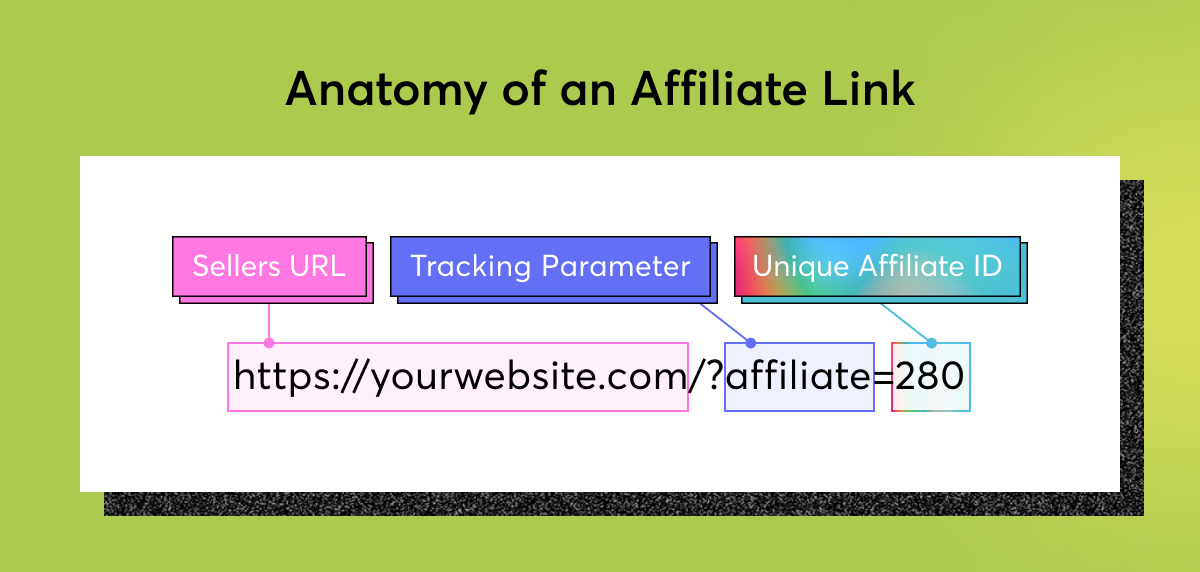
How long that attribution lasts depends on the program and its tracking setup. A 24-hour attribution window and a 30-day one can produce very different results from identical traffic: check this before you send a single click.
Before promoting an offer, make sure you’re using the correct tracking link or affiliate ID provided by the program. One broken parameter is enough to turn real conversions into unpaid ones.
Which Affiliate Channel Should You Choose in 2026?
Choosing an affiliate channel is mostly a trade-off between speed, cost, purchase intent and control. SEO can take months to build momentum, while paid traffic can start producing data the same day — provided there’s enough budget to test properly.

See the full affiliate channel comparison
| Channel | Cost | Speed to first click | Conversion quality | Best for | Main thing to watch |
|---|---|---|---|---|---|
| Website & SEO | Low–Medium | Slow | High | Reviews, comparisons, evergreen offers | Ranking takes time |
| Low | Fast | High | Warm audiences, repeat promotions | Consent and affiliate program rules | |
| YouTube | Low–Medium | Medium | High | Reviews, demos, tutorials | Disclosure and link policies |
| Low | Fast | Medium | Visual products, creator-led promotion | Link placement and disclosure | |
| TikTok & Short-form video | Low | Fast | Medium | Discovery, trends, impulse-friendly offers | Platform and link restrictions |
| Low | Medium | Medium–High | Visual and evergreen niches | Spam and link policies | |
| Telegram & Discord | Low | Fast | Medium–High | Niche communities, engaged audiences | Trust and self-promotion rules |
| Forums & Communities | Low | Medium | High | Research-heavy purchases, niche offers | Strict community rules |
| Native advertising | Paid | Fast | Medium–High | Testing and scaling offers | Compliance, creatives and landing pages |
With a limited budget, testing all nine at once is usually a good way to learn very little from a lot of scattered traffic. Start with two or three channels that fit how people naturally discover and evaluate the offer. Give them enough traffic to produce useful data, track what happens after the click and expand from there.
How to Promote Affiliate Links: 9 Channels to Try in 2026
A thousand clicks from TikTok, Google Search and an email list are three very different things. Traffic volume tells only part of the story: intent, cost, speed and the journey after the click usually decide whether those visits turn into commissions.
Facebook, YouTube and Instagram all reach enormous audiences, yet the same offer performs very differently across them, simply because people arrive with different intentions.

1. Website & SEO
A website is the slow-burn option of affiliate marketing. Getting organic traffic takes time, but a page that ranks for the right search can keep sending high-intent visitors to an offer long after it was published.
The keyword here is intent. Someone searching “best running shoes for flat feet” or “iPhone 17 vs Samsung Galaxy S26” is already much closer to a purchase than someone who happens to see the same product in their social feed. That’s why affiliate links tend to fit naturally into:
- product reviews and comparisons;
- “best X for Y” roundups;
- buying guides;
- tutorials and how-to content;
- resource and recommendation pages.
Place links where they help the reader take the next logical step. A CTA after a product comparison makes sense. Dropping the same link five times into a 700-word article usually doesn’t add much beyond clutter.
SEO affiliate content punishes copy-paste thinking harder than almost any other channel. Ten near-identical “best products” pages built around keywords may look efficient on a spreadsheet, but useful first-hand details, original comparisons and actual decision support give the content a much better reason to exist and to convert.
2. Email
Email traffic comes with a useful head start: these people already know who you are. A relatively small, engaged list can bring better results than a much larger pool of cold traffic, especially when the offer closely matches why people subscribed in the first place.
The affiliate link still needs a good reason to be there. A few formats consistently earn the click:
- Personal recommendations based on real experience or expertise;
- Product comparisons that help subscribers choose between a few relevant options;
- Useful content where the product solves a specific problem;
- Deals and promotions that are genuinely worth opening an email for.
Relevance matters more than list size. Someone who subscribed after reading about running gear is a much warmer prospect for trainers than for a random laptop with an attractive commission. Interests, previous clicks, purchases and signup sources can all help match offers to the right subscribers.
Before you hit send, check two rulebooks: the affiliate program's and your email provider's. Requirements around direct affiliate links, promotional content and disclosures can differ. If an offer needs more context, sending readers to a useful review, comparison or landing page first can also warm up the click before they reach the merchant.
3. YouTube
YouTube is especially strong when people want to see a product in action before spending money. Reviews, demos and comparisons can answer the questions standing between interest and purchase, which makes the click much warmer.
Some formats naturally lend themselves to affiliate offers:
- Hands-on reviews with clear pros, cons and use cases;
- Product comparisons for people choosing between two or more options;
- Tutorials that show the product solving a specific problem;
- “Best X for Y” videos built around a clear buying need.
The affiliate link can sit in the video description, but the video itself has to earn the click. Mention what viewers will find through the link and place it close to the relevant information rather than burying it under a wall of text.
Search intent is a big part of YouTube’s value. A useful review can continue attracting people who are actively researching a purchase months after publication. That gives strong videos a much longer affiliate lifespan than most feed-based content.
Viewers should never have to guess whether money changed hands. Depending on the commercial relationship and applicable rules, that can mean disclosure in the video as well as near the affiliate links in the description. YouTube also requires creators to declare qualifying paid promotions through its paid promotion setting.
4. Instagram
Instagram works best when the product is easy to show, demonstrate or build a story around. Beauty, fashion, fitness, travel, food, home and consumer products have an obvious advantage, but the real driver is content that makes the recommendation feel useful rather than dropped into the feed for a commission.
Reels usually handle discovery, while Stories and profile links can move interested users closer to the offer. A simple affiliate flow might look like:
A practical angle gives the link somewhere to land — a demo, a before-and-after, a comparison, a genuine "how I use it" post. A polished product shot can look great and still give people no reason to click.
Don’t make people hunt for the product. If the content creates interest, the next step should be obvious and easy to find. Link stickers, profile links and other available link placements can shorten that journey considerably.
Affiliate content on Instagram should use the Paid partnership label. Meta treats commissions earned through affiliate links as an exchange of value, even when there’s no traditional sponsorship involved. Local disclosure rules may add further requirements.
5. TikTok & Short-Form Video
Short-form video is built for discovery, which makes it a good match for offers people can understand quickly. A strong hook can put a product in front of a large audience fast, even without an established following. But that attention has a short shelf life — it spikes and drains within seconds.
Affiliate content tends to work better when the product becomes part of the video rather than the entire reason for it. Useful formats include:
- quick demos that show the product in action;
- problem-and-solution videos;
- short comparisons and recommendations;
- tutorials, routines and practical use cases;
- trend-led content where the offer actually fits the trend.
The first few seconds do most of the heavy lifting. Show the problem, result or most interesting part early, then give viewers enough context to decide whether the product is worth another click.
Don’t judge short-form traffic by views alone. A video with 200,000 views can be a worse affiliate asset than one with 15,000 views from people actively interested in the niche. Watch clicks and conversions alongside reach, then replicate the angles that attract buyers rather than spectators.
Commercial content needs to be disclosed on TikTok. When a post promotes a brand, product or service, TikTok requires its Commercial Content Disclosure setting to be turned on. Link availability and other restrictions can still vary by account, market and product category, so check the setup before building your funnel around TikTok.
6. Pinterest
Pinterest sits somewhere between social media and visual search, which is exactly what makes it interesting for affiliates. People often arrive with a plan — redecorating a room, choosing an outfit, organizing a trip, finding a recipe or researching what to buy for a specific project.
Evergreen, visually driven niches get plenty of room to work because of it. Affiliate-friendly content can include:
- product recommendations and collections;
- gift and shopping guides;
- tutorials and how-to Pins;
- style, home and travel inspiration;
- Pins leading to detailed reviews or comparison pages.
Think beyond the individual Pin. A useful Pin can send traffic for much longer than a typical social post, so the destination deserves just as much attention as the creative. Match the image and copy closely to what users will find after the click and use specific search-friendly descriptions rather than generic promotional language.
Pinterest also rewards variety more than repeatedly pushing the same link. Testing different visuals, angles and search terms around one offer gives you more useful information and keeps the account from looking like an affiliate link dump.
Pinterest allows affiliate links, but they come with specific rules. Affiliate content should be original, transparent and used in moderation, while some URL shorteners aren’t supported.
7. Telegram & Discord
Telegram and Discord can be surprisingly effective for affiliate promotion because they bring together small, focused communities around a shared interest. Crypto, gaming, tech, finance, deals and hobby niches are obvious examples, but the model can work anywhere people regularly exchange recommendations.
Trust is the currency here, and it's easy to overspend. Community members notice very quickly when every conversation somehow ends with an affiliate link. Links work better when they support something people already came for:
- curated deals and price drops;
- product recommendations with a clear reason behind them;
- niche news and useful updates;
- guides, resources and tools;
- answers to specific questions from the community.
A Telegram channel gives you more of a broadcast model, while Discord is built around conversation. That changes the approach. On Telegram, a well-timed recommendation can reach subscribers immediately. On Discord, context and participation matter much more, dropping links into active discussions without contributing anything useful is a fast route to getting ignored or removed.
Community traffic can be small and still convert well. A few hundred people deeply interested in one niche may be worth more than thousands of random social views. Watch clicks, conversions and revenue per visitor before dismissing a community because its reach looks modest.
For communities you don’t own, always check the rules around self-promotion and commercial links first. For your own channels or servers, keep affiliate disclosures clear and resist turning every update into a sales pitch.
8. Forums & Communities
Reddit, Quora and niche forums can put an affiliate offer in front of people who are already researching a problem or comparing options. That intent is valuable, but these are also some of the least forgiving places for lazy promotion.
People come to communities for answers, opinions and first-hand experience. An affiliate link has a chance when it supports that conversation. Useful approaches include:
- answering a specific question in depth;
- comparing products someone is already considering;
- sharing relevant experience with a product or service;
- linking to a detailed guide when the full answer needs more context.
Lead with the answer rather than the link. If removing the affiliate link makes the post useless, there probably wasn’t much value in the post to begin with.
A link welcome in one community can get you banned in the next: the rules rarely transfer. Subreddits, forums and Q&A platforms can have very different rules around affiliate links and self-promotion. Some communities prohibit promotional links entirely, even though promotional content isn’t automatically considered spam at the platform level.
This is one channel where trying to scale too aggressively can backfire fast. Repeating similar answers, dropping links into unrelated threads or creating accounts purely for promotion can get content removed and accounts restricted. A smaller number of genuinely useful contributions tends to have a much longer shelf life.
9. Native Advertising
Native advertising is where affiliate promotion becomes much easier to test and scale deliberately. Instead of waiting for a post to rank or a video to take off, you buy access to an audience and start collecting performance data almost immediately.
The usual affiliate funnel looks something like this:

That middle step matters. A prelander can introduce the problem, explain the product, handle objections and build enough intent before sending the visitor to the offer. Reviews, advertorials, comparisons, quizzes and story-led pages are common formats, depending on the vertical.
For a first test, keep the setup controlled. You want enough variation to learn something without spreading the budget across dozens of combinations:
- test a few clearly different creative angles;
- match each headline and image closely to the prelander;
- track clicks and conversions by creative and placement;
- cut obvious underperformers once there’s enough data;
- scale the combinations that produce conversions at a sustainable cost.
Budget enough for the test to produce useful data. For MGID campaigns, the recommended test volume is 5,000–10,000 clicks, so the actual budget depends heavily on your CPC. At a $0.12 CPC, for example, 5,000 clicks would require about $600. The minimum campaign budget can be as low as $50, but hitting the minimum and running a meaningful test are two very different things.
At MGID, we see this distinction matter a lot when affiliates start optimizing: traffic volume gives you data, but the quality of the journey from creative to prelander to offer determines whether that traffic makes money.
Before launching, check the traffic source rules and the affiliate program’s paid-traffic policy. Some offers restrict traffic sources, direct linking, brand bidding or specific claims, and discovering that after you’ve built the campaign is an expensive way to read the terms.
What Not to Do When Promoting Affiliate Links
Most affiliate promotion mistakes are painfully avoidable. They usually happen when getting the click becomes more important than what happens to the user or the account afterward.
A few practices deserve an immediate place on the “don’t” list:
- Don’t spam the same link everywhere: Repeating affiliate links across comments, groups, forums and social posts is an easy way to trigger spam filters and annoy the audience at the same time.
- Don’t hide the commercial relationship: Make affiliate disclosures clear, easy to notice and close to the recommendation or link where required. A vague label or disclaimer buried at the bottom of the page may not be enough.
- Don’t promise what the offer can’t deliver: Fake urgency, exaggerated results and misleading before-and-after claims may generate clicks, but they also attract complaints, rejected ads and poor-quality conversions.
- Don’t assume every traffic source is allowed: Some affiliate programs restrict paid traffic, email, direct linking, brand bidding or particular platforms. Read the program terms before investing in traffic.
- Don’t disguise suspicious links with endless redirects: Shorteners and redirect chains can trigger platform or email security systems and make users less willing to click.
- Don’t copy-paste the same promotion across communities: Reddit, Discord servers, Facebook Groups and niche forums have their own rules and their own tolerance for self-promotion. Read the room before dropping a link.
Repeat that check for long-running campaigns. Offers expire, landing pages move and tracking parameters break more often than you’d expect.
And one that costs affiliates actual money: test the entire funnel yourself before sending traffic to it. Click the ad or post, follow every redirect, check the page on mobile and confirm that your tracking parameters survive the journey. A campaign can look perfectly healthy in the traffic dashboard while conversions quietly disappear somewhere between the first click and the merchant.
How to Track Which Affiliate Channels Actually Convert
Clicks feel like progress. The real question is which ones turned into revenue.
If you promote the same offer through several channels, each one needs to be identifiable in your tracking. Otherwise, you might know that 40 sales happened this week without knowing whether YouTube, email or that one surprisingly successful Pinterest Pin deserves the credit.
A basic tracking setup can include:
- Affiliate subIDs or tracking IDs to label individual channels, campaigns or creatives;
- UTM parameters to separate traffic sources and campaigns in your analytics;
- Unique tracking links for different placements when the affiliate platform supports them;
- Conversion tracking to connect clicks with leads, purchases and revenue.

You don’t need a complicated tracking stack from day one. Affiliate network reporting plus your analytics platform may be enough to start. As the number of offers and traffic sources grows, tracking tools can help organize redirects, subIDs, attribution and reporting in one place.
Be careful with link “beautifying” for its own sake. Extra redirects can create tracking problems or trigger spam and security filters, so every step between the click and the offer should have a clear purpose.
Naming needs to stay consistent. Something simple like youtube_review_1, email_august_1 and native_angle_2 is much easier to work with than trying to remember what campaign_final_new2 meant three weeks later.
And don’t stop at clicks. Compare conversion rate, CPA and revenue by channel. One source may generate 5,000 clicks and 20 sales while another produces 700 clicks and 35 sales. The smaller traffic source is clearly telling you something worth investigating.
How Long Does It Take to Make Affiliate Marketing Work?
Affiliate marketing rarely gives you a clean success signal after the first few clicks. Some channels can generate traffic on day one, while SEO or YouTube may need months before they show their real potential.
A more realistic timeline looks like this:
- First month: focus on testing. Try a small number of channels, offers and creative angles, and confirm your tracking is actually firing correctly. At this stage, even a campaign that doesn’t make money can be useful if it tells you what people click, where they drop off and which angles get zero traction.
- First three months: patterns should start becoming clearer. Some channels will produce better conversion rates, certain offers will outperform others and a few creatives or content formats may account for most of the results. This is where you start cutting weak combinations and putting more effort into the promising ones.
- Beyond three months: scale what has already shown signs of working. That might mean publishing more content around converting keywords, growing an email segment, producing variations of a successful video angle or increasing paid traffic gradually.
Don’t use someone else’s income screenshot as your timeline. A new affiliate starting with organic content and an established media buyer testing paid traffic are playing very different games.
The useful milestone is repeatability: you know where the conversions come from, roughly what it takes to generate them and what happens when you increase traffic. Once you have that, growth becomes a much more practical problem to solve.
FAQ on Promoting Affiliate Links
Can I promote affiliate links without a website?
Yes. Email, YouTube, social media, communities and paid traffic can all work without a website. Just check the affiliate program’s traffic rules before promoting an offer.
Can I post affiliate links directly on social media?
Sometimes. It depends on the platform and affiliate program. When an offer needs more context, a review, comparison or landing page before the affiliate link can make more sense.
Do affiliate links need a disclosure?
In many markets, yes. Affiliate disclosures generally need to be clear and easy to notice, while platforms such as Instagram and TikTok also have their own commercial-content disclosure tools. Check both the rules for your audience’s market and the platform you use.
Can I promote affiliate links with paid ads?
Yes, if both the affiliate program and ad platform allow it. Check for restrictions on paid traffic, direct linking, brand bidding and promotional claims before spending your budget.
Can I use the same affiliate link on different channels?
Usually, yes. But separate subIDs or tracking parameters make it much easier to see whether YouTube, email, native traffic or another channel actually produced the conversion.
Which channel is best for affiliate marketing beginners?
Start where you already have an advantage: an audience, SEO knowledge, video skills, a niche community or paid traffic experience. Otherwise, pick one or two channels, learn what converts and expand from there.
Turn Traffic Into Something You Can Scale
Choosing the right channel comes down to two questions: where does your audience look for this kind of offer, and how close are they to a decision? The offer, creative, landing experience and tracking then determine how much that click is actually worth.
Start narrow, measure beyond traffic and give promising combinations enough room to prove themselves. Once you know which offer and audience work together, adding more traffic becomes a much smarter bet.
For affiliates ready to test paid acquisition, MGID provides access to native traffic across premium publisher environments, along with targeting, campaign optimization and performance tools to help find the placements and audiences that convert.
If you already have an offer worth testing, start your first MGID campaign and see how it performs with new audiences.