The best ad spy tools reveal which competitor ads are running, where they appear and what’s gaining traction, giving you real-world inspiration for your next campaign.
Ever wished you could peek over a competitor’s shoulder and see what they’re testing? In digital advertising, you pretty much can.
Ad spy tools let you dig into the creatives, landing pages, traffic sources and campaign activity already out in the wild. Use that visibility to spot patterns, see what competitors keep testing and find angles worth testing in your own campaigns.
The tricky part is choosing the right tool. Some are built around Meta and TikTok, others specialize in native, display or push traffic, and their prices can range from free to hundreds of dollars a month.
So we compared the best ad spy tools for 2026 by network coverage, price and what each one actually does best. We’ll also get into how to use all that competitive intel in practice, including a closer look at spying on native ads.
- What Are Ad Spy Tools?
- Best Ad Spy Tools in 2026: Quick Comparison
- Which Type of Ad Spy Tool Do You Need?
- Best Ad Spy Tools by Use Case
- How to Actually Use an Ad Spy Tool
- How to Spy on Native Ad Creatives
- Free Ad Spy Tools and Alternatives
- Is It Legal and Ethical to Spy on Competitor Ads?
- FAQs About Ad Spy Tools
What Are Ad Spy Tools?
The surrounding campaign data makes those creatives much easier to read. You can check how long an ad has been running, where it appears, which landing page it leads to and whether the advertiser is testing several versions of the same idea. Put those clues together, and you start to see which concepts have staying power and which ones disappear after a quick test.
Each tool also gives you a different view of the advertising landscape. A platform built around Meta ads may tell you little about native campaigns, while a native-focused database may have limited visibility into TikTok or search. Coverage should therefore be one of the first things you check when choosing a tool.
Best Ad Spy Tools in 2026: Quick Comparison
Need the shortlist first? Here’s how the leading ad spy tools compare on the factors that matter most when choosing one: network coverage, entry price, free access and primary use case.
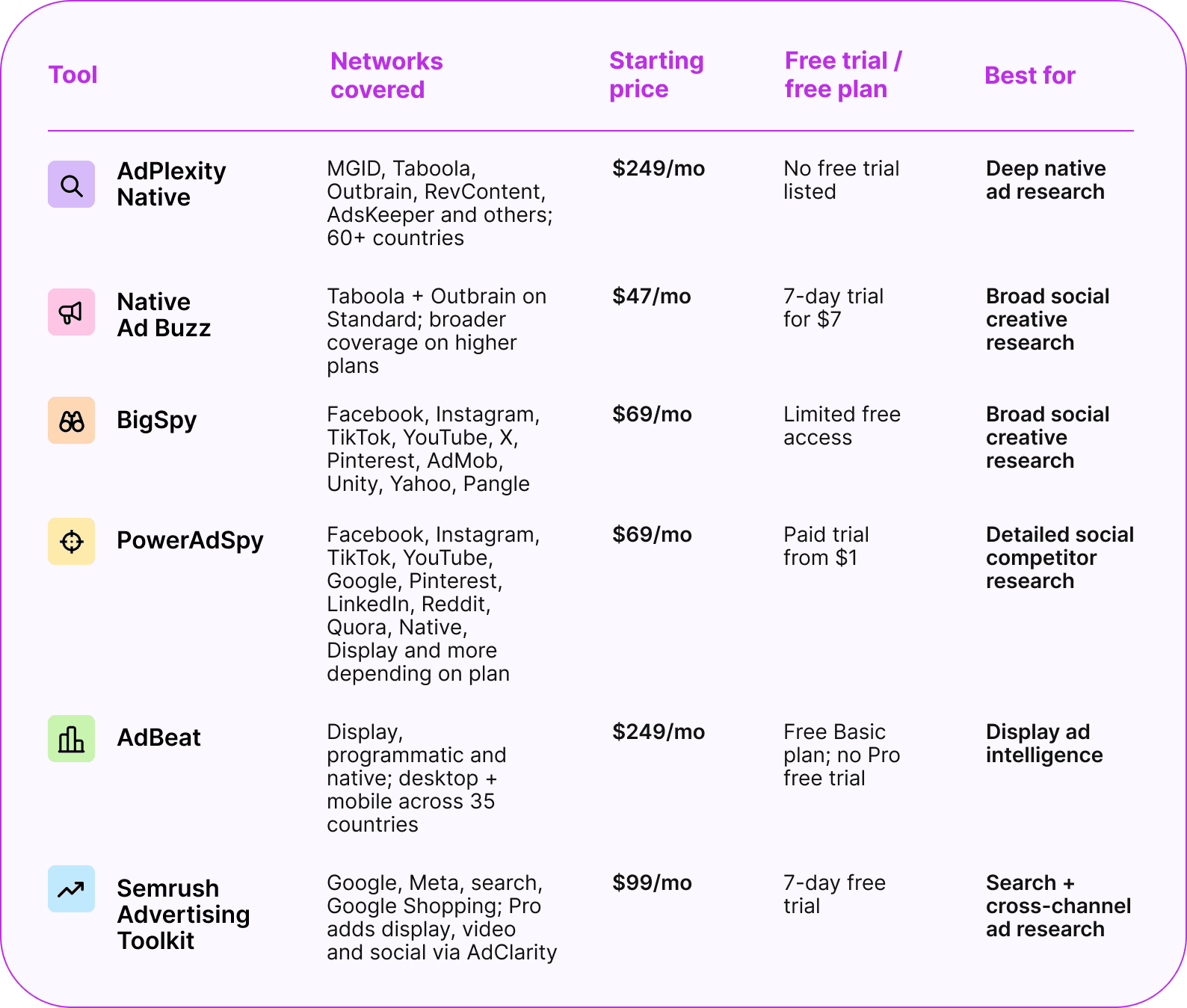
Compare ad spy tools in detail
| Tool | Networks covered | Starting price | Free trial / free plan | Best for |
|---|---|---|---|---|
| AdPlexity Native | MGID, Taboola, Outbrain, RevContent, AdsKeeper and others; 60+ countries | $249/mo | No free trial listed | Deep native ad research |
| Native Ad Buzz | Taboola + Outbrain on Standard; broader coverage on higher plans | $47/mo | 7-day trial for $7 | Budget native research |
| BigSpy | Facebook, Instagram, TikTok, YouTube, X, Pinterest, AdMob, Unity, Yahoo, Pangle | $69/mo | Limited free access | Broad social creative research |
| PowerAdSpy | Facebook, Instagram, TikTok, YouTube, Google, Pinterest, LinkedIn, Reddit, Quora, Native, Display and more depending on plan | $69/mo | Paid trial from $1 | Detailed social competitor research |
| AdBeat | Display, programmatic and native; desktop + mobile across 35 countries | $249/mo | Free Basic plan; no Pro free trial | Display ad intelligence |
| Semrush Advertising Toolkit | Google, Meta, search, Google Shopping; Pro adds display, video and social via AdClarity | $99/mo | 7-day free trial | Search + cross-channel ad research |
The biggest difference between these tools is coverage. Start with the traffic source you actually buy — native, social, display or push — and narrow the list from there. A huge ad database has limited value when it barely covers the channel where you run campaigns.
Which Type of Ad Spy Tool Do You Need?
Before opening twelve tabs and comparing feature lists, start with one question: where are the ads you actually want to research?
Most ad spy tools have a home turf. Some go deep on Meta and TikTok creatives, while others are built around native placements, display campaigns or affiliate traffic. Matching the tool to your traffic source will narrow the field quickly.
- Native advertising: Look for coverage of networks such as MGID, Taboola and Outbrain, along with GEO, device and publisher filters. Landing page tracking is especially useful here because the creative and the page it leads to often work as one funnel.
- Social ads: Prioritize Meta, Instagram and TikTok coverage, plus filters for creative format, advertiser, engagement and how long an ad has been active.
- Display and search: Focus on advertiser history, publisher placements, keywords, spend estimates and historical campaign data.
- Push and affiliate traffic: Look for network and GEO filters, campaign longevity and landing page data. Push coverage varies by vendor and is often offered as a separate product rather than bundled with native or social research. AdPlexity, for example, offers Push separately from its Native product.
Once you know which view of the market you need, comparing individual tools becomes much easier.
Best Ad Spy Tools by Use Case
A tool can look impressive on a feature list and still be a poor fit for the traffic you buy. So rather than forcing every platform into a single ranking, we’ve grouped our picks around the channels and jobs they handle best.
Best Native Ad Spy Tools
Native campaigns have a few quirks that make specialized research especially useful. The same offer can appear across different publishers, GEOs and devices with different headlines, thumbnails and landing pages, giving you plenty of moving pieces to investigate.
For native research, focus on tools that make it easy to:
- Check coverage on the networks you actually use to make sure there’s enough relevant campaign data;
- Test GEO coverage in your target markets before relying on the database for ongoing research;
- Follow creatives through to their landing pages to understand how the ad and post-click experience work together;
- Use campaign longevity as a research signal to find creatives and angles worth investigating further;
- Compare variations from the same advertiser to see which headlines, visuals and landing pages they keep testing.
Our picks for native advertising: AdPlexity and Native Ad Buzz make our shortlist. AdPlexity offers deeper research across major native networks and GEOs, while Native Ad Buzz provides a more affordable starting point for Taboola and Outbrain research.
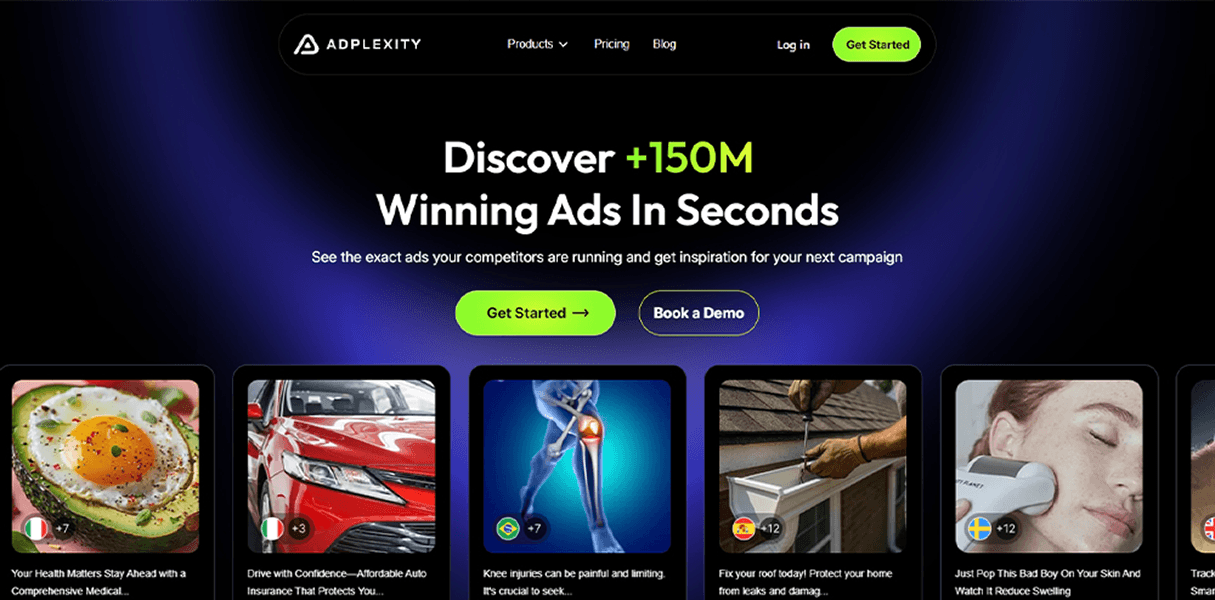
AdPlexity — Best for Deep Native Campaign Research
Price: $249/month for Native
Coverage: MGID, Taboola, Outbrain, RevContent, AdsKeeper and other native networks across 60+ countries
Best for: Active media buyers and affiliate marketers
AdPlexity gives native advertisers plenty of room to dig. Its database covers 20M+ ads across 60+ countries, and detailed filters let you narrow campaigns by keyword, advertiser, publisher, network and other parameters. AdPlexity also offers separate intelligence products for push, mobile and desktop campaigns, which may be useful if your research extends beyond native traffic.
Useful features include:
- Landing page downloads for studying the full post-click funnel;
- Trending campaign discovery for finding offers and creatives gaining traction;
- Advanced filters and AI categorization for getting through a very large database faster.
The $249 monthly price makes it a serious investment, especially for occasional research. For media buyers running native campaigns regularly, though, the depth of coverage can justify it.
Best pick if you need detailed native intelligence across multiple major ad networks rather than a lightweight creative library.
Native Ad Buzz — Best Budget Option for Native Ad Research
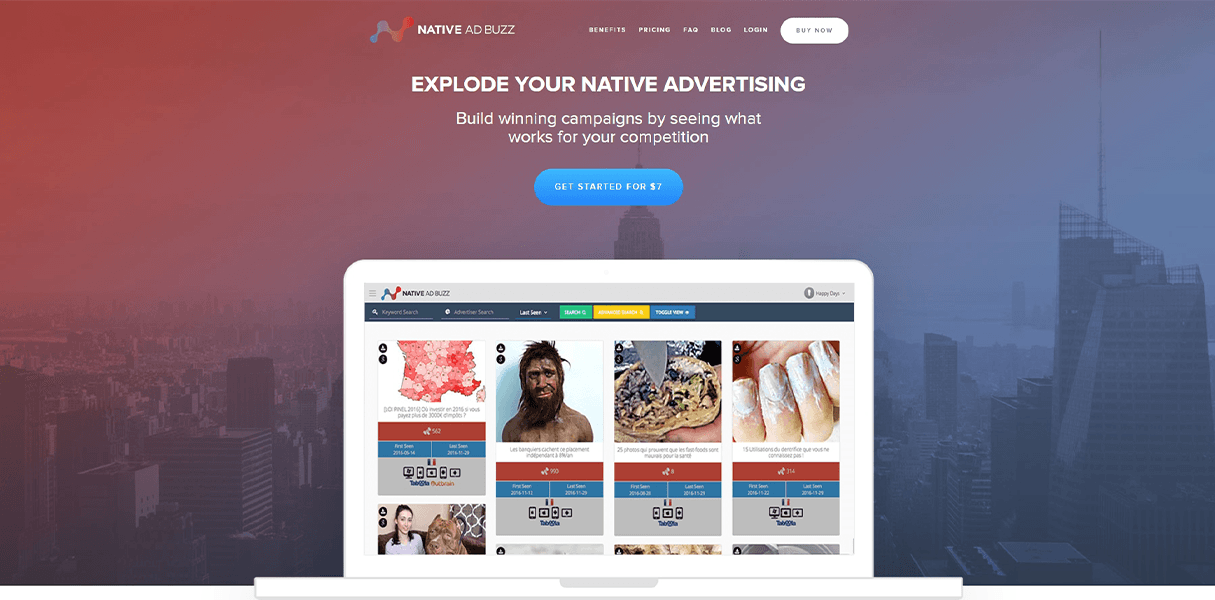
Price: From $47/month; 7-day trial for $7
Coverage: Taboola and Outbrain on the Standard plan
Best for: Marketers who want an affordable entry point into native ad research
Native Ad Buzz keeps its focus squarely on native campaigns. You can research competitors, inspect ads and landing pages, and filter campaigns by factors such as advertiser and device.
Key features include:
- Competitor search for following specific advertisers;
- Landing page and funnel research alongside native creatives;
- Favorites library for saving campaigns you want to revisit.
The $47 Standard plan comes with fairly tight limits, including two networks, two countries and one month of historical data, so broader research requires an upgrade.
Best pick if you primarily research Taboola and Outbrain and want to start with a lower-cost native intelligence tool.
Best Social Ad Spy Tools
Social ad research moves quickly: creatives burn out, formats shift and successful ideas often spread across platforms. The right spy tool should make it easy to trace those patterns without burying you in thousands of loosely relevant ads.
For social ad research, look for tools that help you:
- Check coverage across the platforms in your media mix to make sure the database is useful where you actually run campaigns;
- Look back at historical creatives to compare current campaigns with ads that are no longer active;
- Filter by format and campaign details to narrow large databases to the creatives most relevant to your research;
- Review engagement signals in context rather than treating likes, comments or shares as direct evidence of campaign performance;
- Compare variations from the same advertiser to see how brands test hooks, visuals, formats and copy over time.
Our picks for social advertising: BigSpy and PowerAdSpy make the shortlist. BigSpy is a strong starting point for broad creative research across multiple social platforms, while PowerAdSpy offers a larger feature set for marketers who want to dig further into competitor campaigns.
BigSpy — Best for Exploring Social Ad Creatives
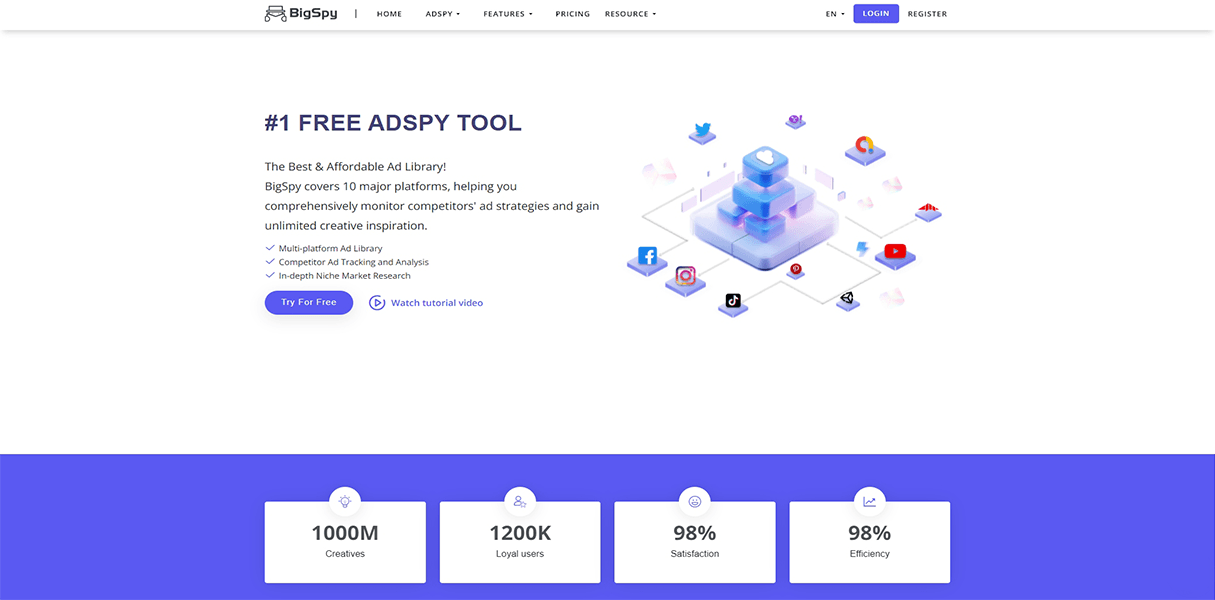
Price: From $69/month; limited free access available
Coverage: Up to 10 platforms, depending on plan, including Facebook, Instagram, TikTok, YouTube, X and Pinterest
Best for: Marketers who want flexible social ad research across multiple platforms
BigSpy gives you one place to browse creatives running across several major social platforms. Its filters and ranking tools are particularly handy when you want inspiration from a specific niche without scrolling through an endless stream of unrelated ads.
Key features include:
- Multi-platform creative search from one dashboard;
- Ad ranking and discovery tools for surfacing notable creatives;
- Limited free access for testing basic research before paying.
The free tier comes with tight usage limits, so frequent competitor research will require a paid plan.
Best pick if you want broad social creative coverage and an inexpensive way to start exploring competitor ads.
PowerAdSpy — Best for Detailed Social Competitor Research
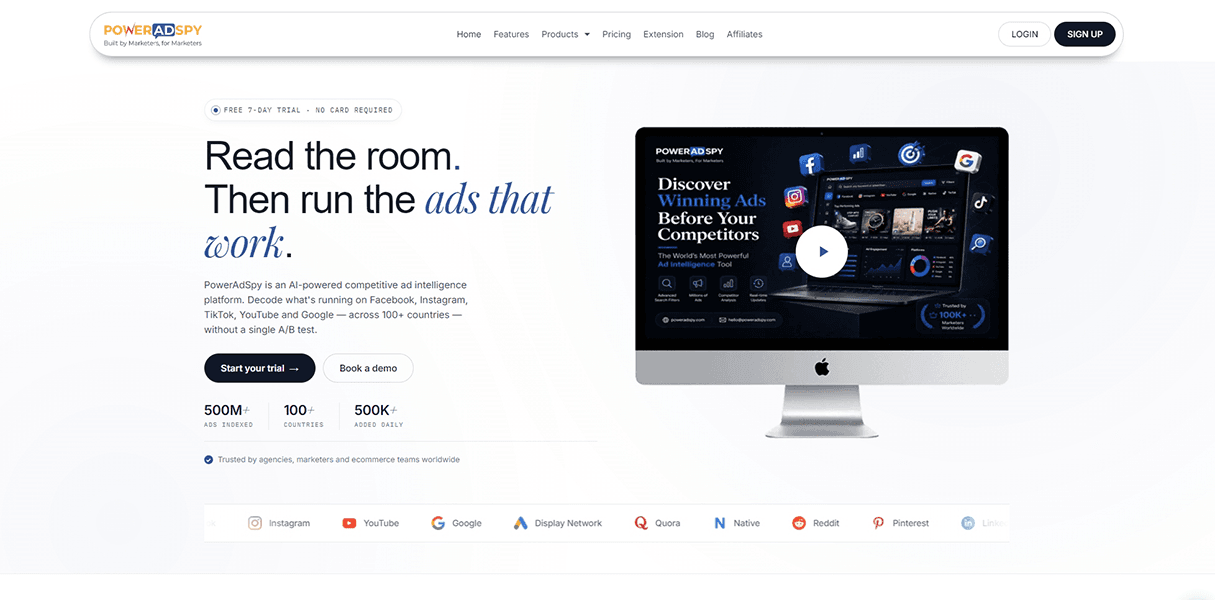
Price: From $69/month; Basic trial $1 for 3 days
Coverage: Facebook, Instagram, TikTok, YouTube and other channels
Best for: Marketers who want deeper filtering and competitor research
PowerAdSpy is geared toward marketers who already know what they want to investigate. You can search by keywords, advertisers, domains and other campaign details, then narrow a large pool of creatives to the competitors and niches that matter.
Key features include:
- Detailed search filters for focused competitor research;
- Advertiser and domain search for following specific brands and campaigns;
- Creative and engagement data for examining how ads are presented and received.
With hundreds of millions of indexed ads, there’s plenty to explore, although that scale also makes good filtering essential.
Best pick if you regularly research specific competitors and want more ways to drill into their social advertising activity.
Best Display and Search Ad Spy Tools
Display and search leave different trails to follow. With display, you’re often trying to figure out where competitors appear, which creatives they keep in rotation and how their media strategy changes over time. Search research brings keywords, ad copy and competitor positioning into the picture.
For display and search research, choose tools that make it easier to:
- Treat spend and impression estimates as directional signals when comparing competitors and their relative activity;
- Check publisher-level placement data to understand where competitor ads are actually appearing;
- Review creative rotation over time to see how campaigns, messaging and formats change;
- Compare creatives with their landing pages to understand the broader campaign approach;
- Consider how search and display are packaged if you need both, since coverage and access can vary by product or plan.
Our picks for display and search advertising: AdBeat is our pick for dedicated display competitive intelligence, while Semrush is the stronger choice when you want competitor ad research alongside search, keyword and broader marketing data.
AdBeat — Best for Display Ad Intelligence
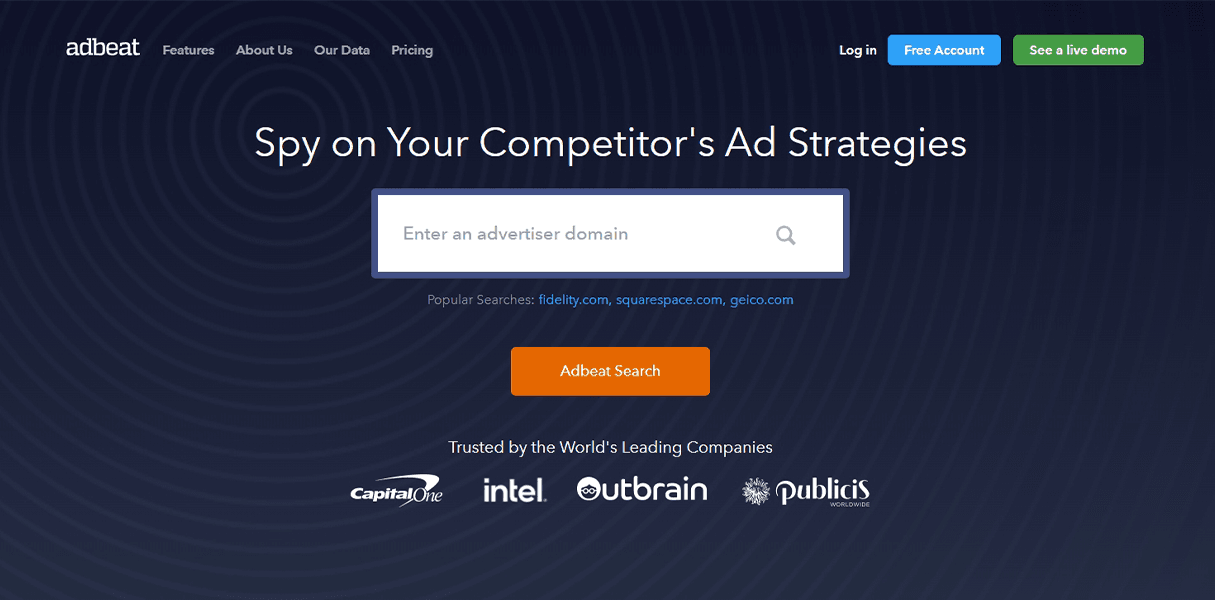
Price: From $249/month; free Basic account available
Coverage: Display, programmatic and native ads across 35 countries
Best for: Advertisers and agencies researching placements and competitor display strategies
AdBeat goes deep on the mechanics behind display campaigns. You can search advertisers, ads and publishers, inspect placement URLs and filter results by device, date and ad network.
Key features include:
- Publisher placement data for seeing where competitors buy exposure;
- Historical campaign data for tracking how advertising changes over time;
- Competitor alerts and comparison tools on higher-tier plans.
The $249 starting price puts the full platform well above casual-research territory, although AdBeat also offers a limited free Basic account.
Best pick if display advertising is a meaningful part of your media mix and you want to investigate where competitors are placing their ads.
Semrush Advertising Toolkit — Best for Search and Cross-Channel Research
Price: From $99/month; Pro with AdClarity from $220/month
Coverage: Search, Google Shopping, display, video and social
Best for: Marketers who want ad intelligence alongside PPC research
Semrush makes sense when competitor research stretches beyond creatives. Its Advertising Research tools show paid keywords, competitor domains and search ad copy, while the Pro plan adds AdClarity for display, video and social intelligence across 30+ markets.
Key features include:
- Competitor keyword research for digging into paid search strategies;
- Historical search ad data for seeing how messaging changes over time;
- AdClarity insights into creatives, placements, impressions and estimated spend.
The trade-off is price: you’ll need the $220/month Pro plan to unlock AdClarity, so the full package is easier to justify when you’ll use both search and cross-channel intelligence.
Best pick if you want to connect competitor ad research with the keywords and search strategy behind it.
How to Actually Use an Ad Spy Tool
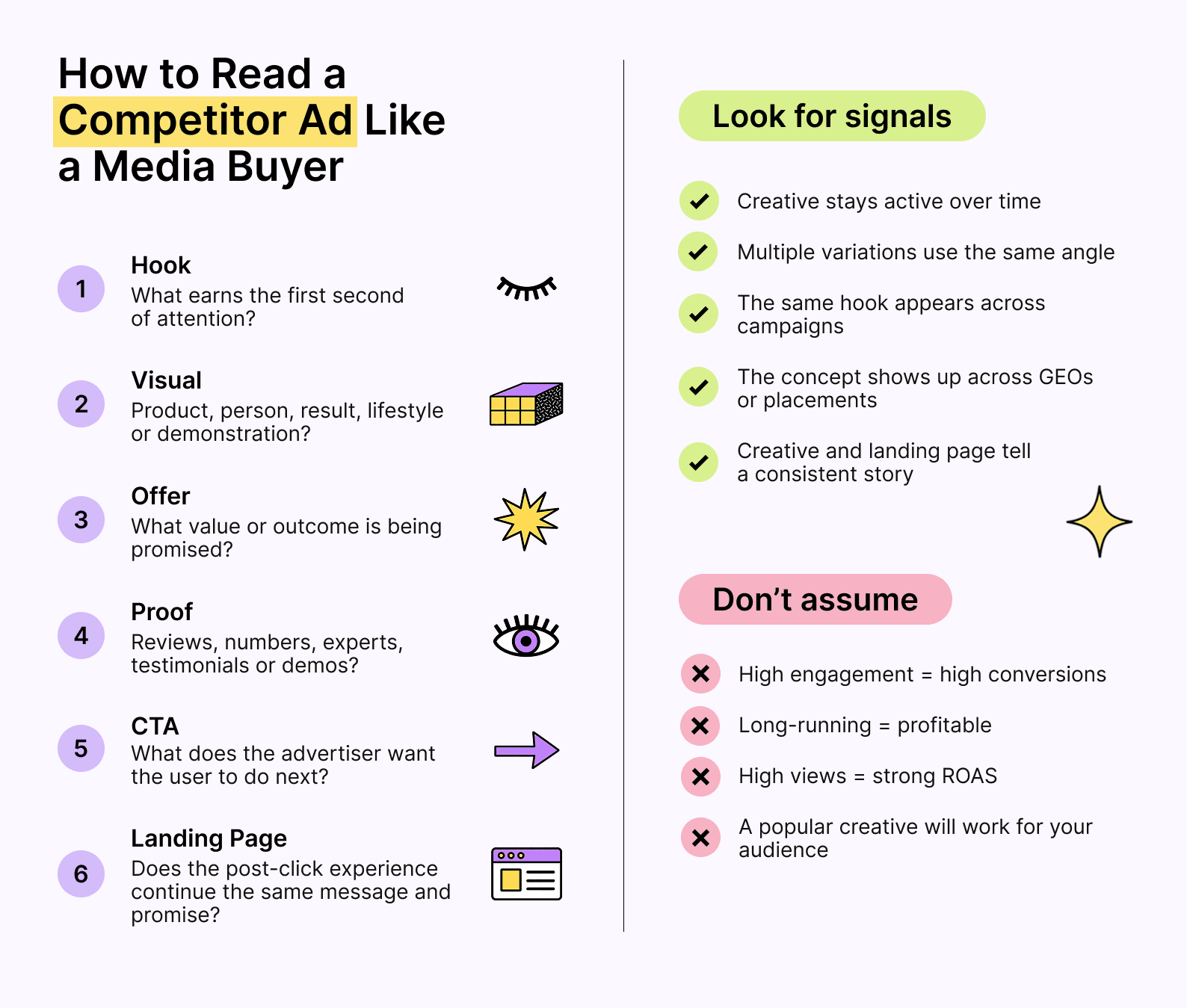
Opening a spy tool and saving every ad that catches your eye gets you a folder full of screenshots. Start with a question instead: what are you trying to learn? Maybe you need a stronger creative angle, want to understand a competitor’s funnel or are looking for ideas to improve CTR or conversions.
Once you have that goal, use this workflow to turn competitor research into something you can actually test.
1. Start With a Small Competitor Set
Pick three to five advertisers targeting a similar audience, then narrow the search by channel, GEO, device and date range. You can also search by keywords or offers to find advertisers outside your immediate competitor list.
2. Look for Patterns With Staying Power
Pay attention to creatives that have been active for a while or appear in several variations. Then compare them. Which hooks keep coming back? What formats, offers or visual styles repeat across advertisers?
Treat longevity as a clue rather than a performance metric: you can see that an advertiser kept an ad running, but you can’t see their actual ROAS.
3. Follow the Click
Open the landing pages behind promising ads and map the journey from creative → headline → offer → proof → CTA.
Look for continuity. Does the landing page deliver on the promise made in the ad? What kind of proof appears? Is the visitor sent straight to a product, an advertorial, a lead form or another step in the funnel?
4. Turn Observations Into a Hypothesis
Now translate the patterns you found into one idea you can test.
For example:
Observation: Several competitors lead with customer testimonials.
Hypothesis: Test testimonial-led creative against our current product-led creative to see whether social proof improves response.
Keep the variable clear. Testing a new hook, format, offer and landing page simultaneously makes it much harder to understand what drove the result.
5. Build Your Own Version and Test It
Use the research as a creative brief, then develop an original execution around your brand, audience and offer. Launch it against your current control and measure it using the KPIs that matter for the campaign.
That final step closes the loop: what you learn from your own campaign becomes the starting point for the next round of research.
How to Spy on Native Ad Creatives
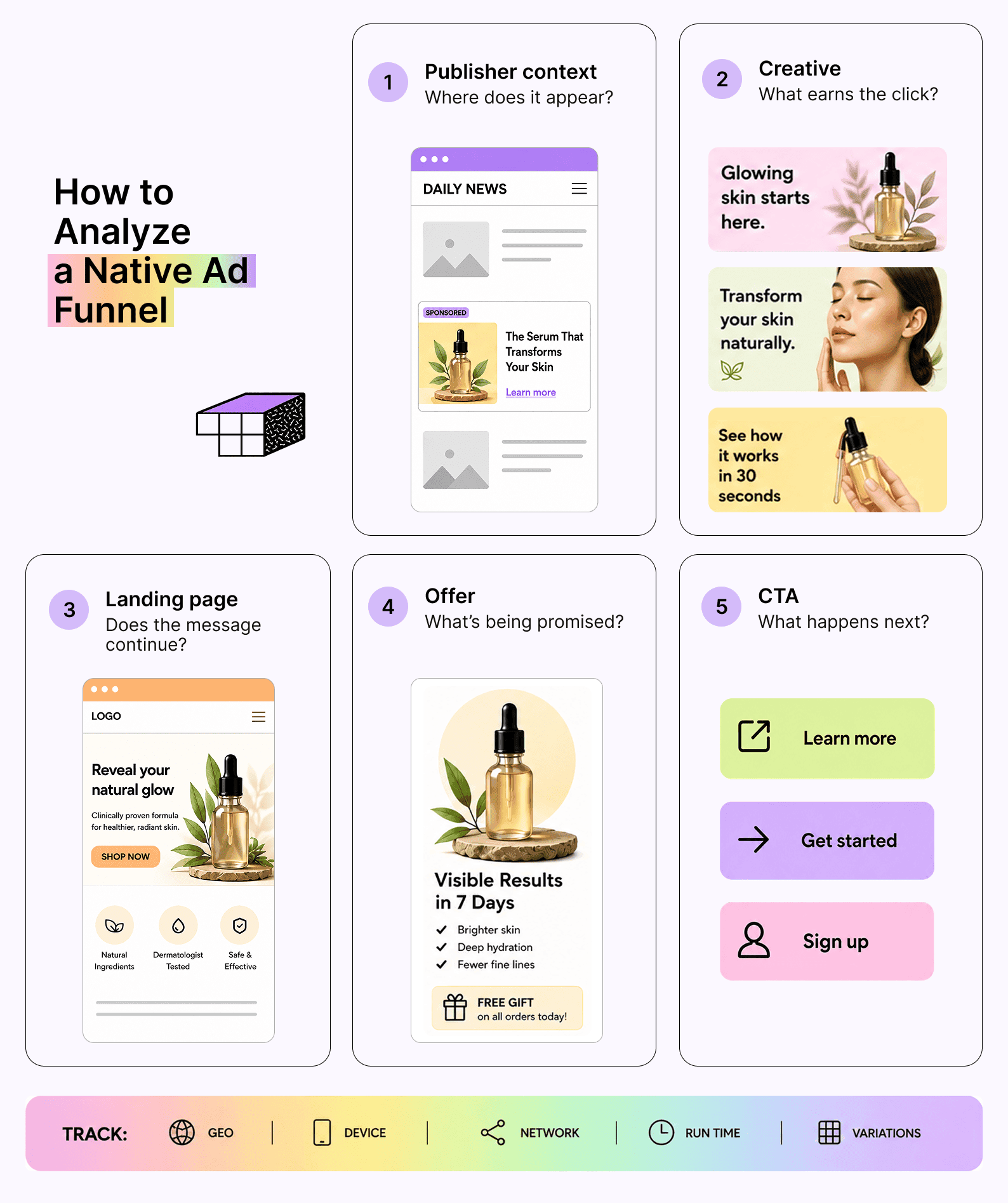
Native ads deserve a slightly different research routine. A small thumbnail and a short headline may be all you see on the publisher page, but that first click can lead into an advertorial, quiz, product page or another carefully designed funnel.
Say you’re researching competitors that advertise through MGID. Here’s what to look for.
Start With the Headline and Thumbnail as a Pair
Native creatives rely heavily on these two elements to win the click. Save several ads from the same advertiser and look for recurring patterns:
- Headline angle: curiosity, problem/solution, benefit, story or offer;
- Visual subject: product, person, result, situation or lifestyle;
- Variations: which headlines are paired with different images and which combinations keep appearing?
MGID itself recommends testing multiple headline-and-image combinations, so variations can give you useful clues about the angles an advertiser is exploring.
Check Where and How the Campaign Appears
Use your spy tool to narrow the research by MGID, GEO, device and date, where those filters are available. A concept that appears repeatedly across markets or stays active over time deserves a closer look.
Also consider the publisher context. Native advertising is designed to sit alongside editorial content, so the environment around the ad can influence how a creative feels to the reader.
Follow the Funnel
Click through to the destination and map what happens next:
Check whether the landing page continues the same promise and visual story. MGID’s current guidance specifically recommends that the headline, media and other creative elements work together with the post-click experience.
If the destination is an advertorial, look at its opening hook, structure, proof points and transition to the offer. Keep compliance in mind as well: MGID requires applicable advertorial pages to be clearly identified as advertising.
Turn the Pattern Into Your Own Test
Suppose you find several long-running MGID ads in your vertical using problem-led headlines + people-focused thumbnails + educational advertorials. That gives you a test direction, rather than a creative to copy.
You might test:
- your existing headline against a problem-led angle;
- product imagery against a people-focused thumbnail;
- a direct landing page against an educational pre-sell page.
The goal is to reverse-engineer the strategy, then build your own execution around it.
That distinction matters. Competitive research can tell you which ideas deserve a test; your own campaign data tells you whether they work for your audience.
Free Ad Spy Tools and Alternatives
Not ready to add another subscription to your marketing stack? You can still do useful competitor research for free. The trade-off is usually less historical data, fewer filters and narrower network coverage.
Here are a few places to start:
- Meta Ad Library: Search active ads across Meta platforms and browse the creatives currently running from a particular advertiser. It’s especially handy when you already know which competitors you want to investigate.
- TikTok Creative Center: Explore high-performing TikTok creatives through Top Ads and filter them by region, industry, campaign objective and other criteria. It’s a useful free starting point for spotting creative patterns and trends on TikTok.
- Google Ads Transparency Center: Search by advertiser or website to see active ads published through Google, with platform filtering available for recent advertising history.
- BigSpy Free: Offers a limited taste of a commercial spy tool. The current free plan includes Facebook research with five queries per day, which is enough for occasional creative checks but restrictive for serious research.
What Can You Do With Free Tools?
A simple no-cost research routine can already answer some useful questions:
- Find three to five competitors in the relevant platform library.
- Save recurring creative angles rather than every individual ad.
- Compare headlines, visuals, formats and offers across those advertisers.
- Check the same brands across multiple libraries to see how their messaging changes from Meta to TikTok or Google.
- Turn the patterns you find into one original hypothesis to test in your own campaign.
Is It Legal and Ethical to Spy on Competitor Ads?
Competitive ad research is a standard part of marketing. Public ad libraries and commercial intelligence tools make campaigns visible specifically so they can be searched and analyzed. The important question is what you do with what you find.
A good rule is to study the strategy behind an ad rather than reproduce the ad itself.
Fair competitive research can include:
- Identifying recurring hooks, formats and offers in your market;
- Comparing how competitors position similar products;
- Studying landing page and funnel structures;
- Tracking creative trends across networks and GEOs;
- Turning those observations into hypotheses for your own tests.
Where you can run into trouble: copying another advertiser’s images, videos, copy, branding or other protected creative elements. Misleading customers by imitating a competitor’s identity creates another obvious red flag.
Copyright, trademark and advertising rules vary by market, so campaigns that get close to protected material may require legal review.
FAQs About Ad Spy Tools
What is the best ad spy tool in 2026?
It depends on the channel you want to research. AdPlexity and Native Ad Buzz are strong choices for native advertising, BigSpy and PowerAdSpy cover social research, while AdBeat specializes in display intelligence. Start with network coverage, then compare price, filters and historical data.
What is the best free ad spy tool?
For social research, official libraries are a good place to start. Meta Ad Library, TikTok’s creative intelligence resources and Google Ads Transparency Center let you investigate advertising without paying for a dedicated spy platform. BigSpy also offers limited free access.
Can ad spy tools tell you which ads are profitable?
No. Spy tools can surface signals such as how long an ad has been active, how widely it appears, engagement data and how many variations an advertiser is running, depending on the platform. They generally cannot see a competitor’s actual CPA, ROAS or profit margin, so a long-running ad should be treated as a research signal rather than proof of profitability.
Can you spy on native ads?
Yes. Native-focused tools can index creatives running across networks such as MGID, Taboola and Outbrain and let you research them by factors such as GEO, device, advertiser and campaign duration. Some also capture landing pages, making it possible to study the journey beyond the initial native creative.
Are ad spy tools legal?
Using publicly available advertising data for competitive research is generally legitimate, but access to an ad does not give you the right to copy it. Copyright, trademark and advertising rules still apply to creatives, branding and other protected material, and requirements vary between markets.
Choose the Ad Spy Tool That Matches Your Traffic
The best ad spy tool is the one that gives you a clear view of the advertising space you actually compete in. Start with your primary channel, decide how much research depth you need and then look at price. That will usually narrow a long list of platforms down to two or three realistic options.
Whatever tool you choose, the real value comes from what happens after the search. Look for recurring patterns, turn them into hypotheses and test original executions against your own campaign data. Competitor ads can point you toward an interesting direction; your results decide whether that direction is worth pursuing.
For native advertisers, that research becomes especially useful when you can apply what you learn directly to new creative and targeting tests. If native is part of your next campaign, explore advertising with MGID and put those insights to work across MGID’s publisher ecosystem.